

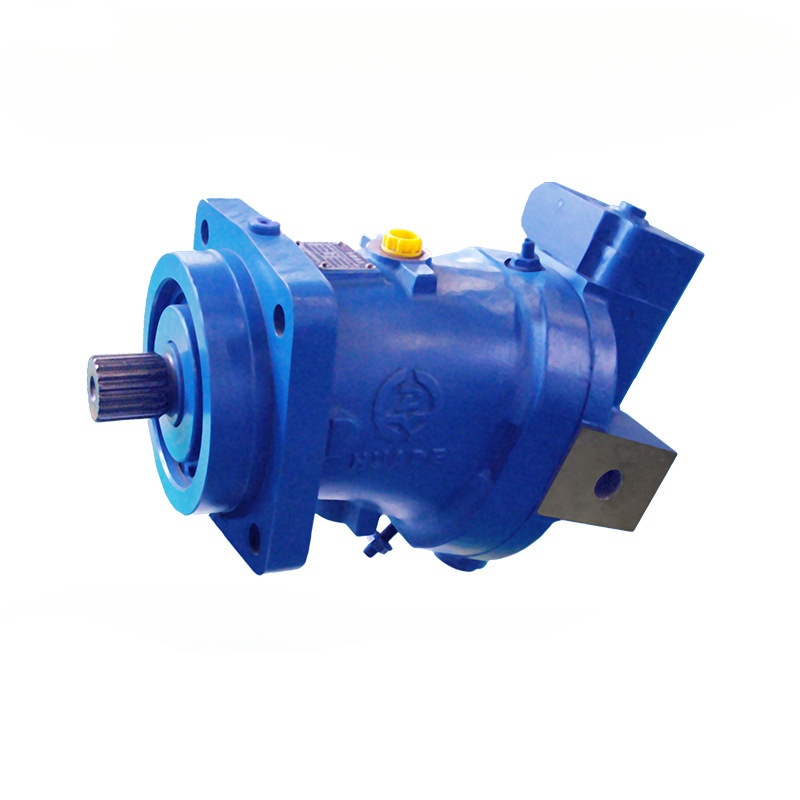



If you’ve ever watched a 40-ton excavator move with the precision of a surgeon, you’re seeing an axial piston pump's stroke control in action. In my 20 years on the shop floor, I’ve realized that while most people see a "pump," engineers see a dynamic energy converter. The "stroke" is simply the distance the pistons travel inside the cylinder block. If you control that distance, you control the flow.
The "Mastermind" Behind the Stroke: The Swash Plate
At the heart of almost every variable displacement pump is a component called the swash plate. Think of it as a tilted treadmill for the pistons. As the pump’s cylinder block rotates, the pistons follow the angle of this plate.
The geometry is straightforward. The stroke length (\( S \)) is determined by the pitch circle diameter (\( D \)) of the pistons and the tilt angle (\( \alpha \)) of the swash plate. We calculate it using this formula:
$$ S = D \cdot \tan(\alpha) $$- Maximum Angle: When the swash plate is tilted at its limit (usually 15° to 20°), the pistons take their longest "stride." This results in maximum oil output.
- Zero Angle: If the plate is perfectly vertical (\( \alpha = 0 \)), the pistons spin but don’t move back and forth. The pump stays on, but the flow stops. This is the "standby" mode that saves a massive amount of energy.
The Tug-of-War: How We Physically Move the Plate
The swash plate is heavy, and the internal hydraulic forces trying to push it back to center are enormous. You can’t just move it by hand. Instead, we use a "tug-of-war" system inside the pump housing involving two main actors:
- The Bias Spring (or Piston): This is the "strongman" that always wants to push the pump toward maximum displacement. It ensures that when you start the engine, you have immediate oil flow.
- The Servo Piston: This is the "controller." It’s a larger hydraulic cylinder that fights the bias spring. When the pump's control valve sends oil to the servo piston, it overcomes the spring and forces the swash plate toward a smaller angle (a process we call de-stroking).
4 Control Methods You Need to Know
In the field, we don't just move the swash plate randomly. We use specific "logics" depending on what the machine needs to do.
| Control Type | Primary Input | Core Benefit | Common Application |
|---|---|---|---|
| Pressure Compensation (DR) | System Pressure | Prevents system overpressure without heat-generating relief valves. | Hydraulic presses, industrial power units. |
| Load Sensing (LS) | Load Pressure + \( \Delta P \) | Highest efficiency; only provides the flow the load actually asks for. | Excavators, mobile cranes, tractors. |
| Torque/Power Limiting | \( P \times Q \) Formula | Prevents the engine from stalling by reducing flow as pressure rises. | Heavy construction machinery. |
| Electronic Proportional (EP) | 4-20mA / CAN bus | Precision integration with PLC or remote controls. | Injection molding, flight simulators. |
Why Your Control Fails: Expert Troubleshooting
I’ve spent countless hours diagnosing why a pump "won't stroke up" or "gets stuck at high pressure." If your pump's stroke isn't responding, it’s rarely a broken swash plate. It’s almost always a semantic issue within the hydraulic signals.
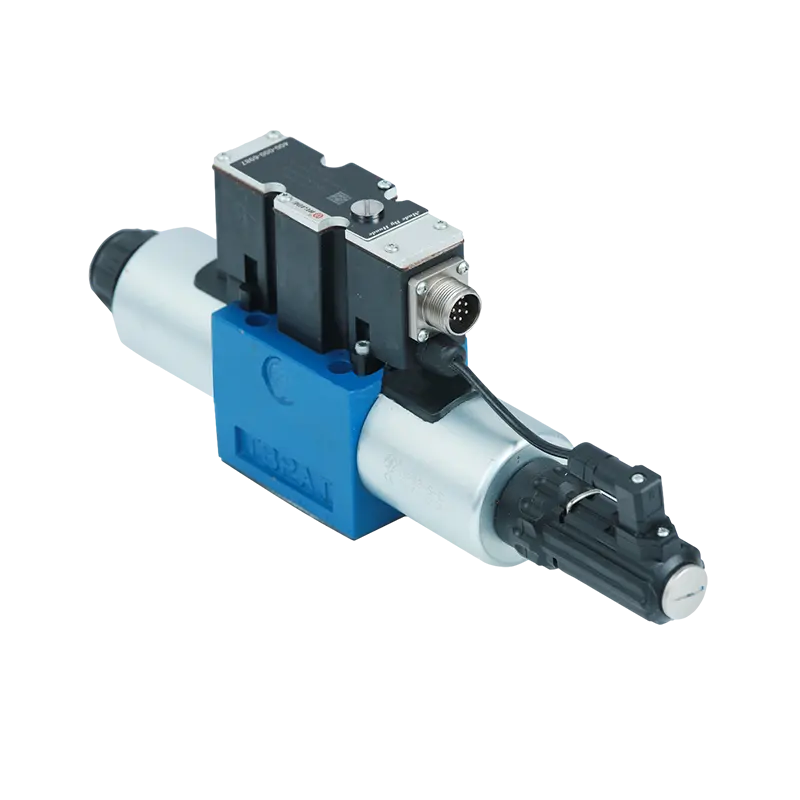
- Spool Sticking: The control valve (the "brain" on top of the pump) has tiny tolerances. If your oil cleanliness doesn't meet ISO 4406 18/16/13 standards, a microscopic piece of metal can jam the spool. This prevents oil from reaching the servo piston.
- Margin Pressure Issues: In Load Sensing systems, if the Margin Pressure (the difference between pump pressure and load pressure) is set incorrectly, the pump will feel "sluggish" or won't reach full stroke.
- Orifice Clogging: Most control lines have a tiny damping orifice (usually 0.6mm to 0.8mm) to prevent the swash plate from "hunting" or vibrating. If this tiny hole clogs, the pump becomes erratic.
If a pump is stuck at zero stroke, check the case drain pressure. If the drain line is restricted, pressure builds up inside the housing and can actually physically block the swash plate from moving.