

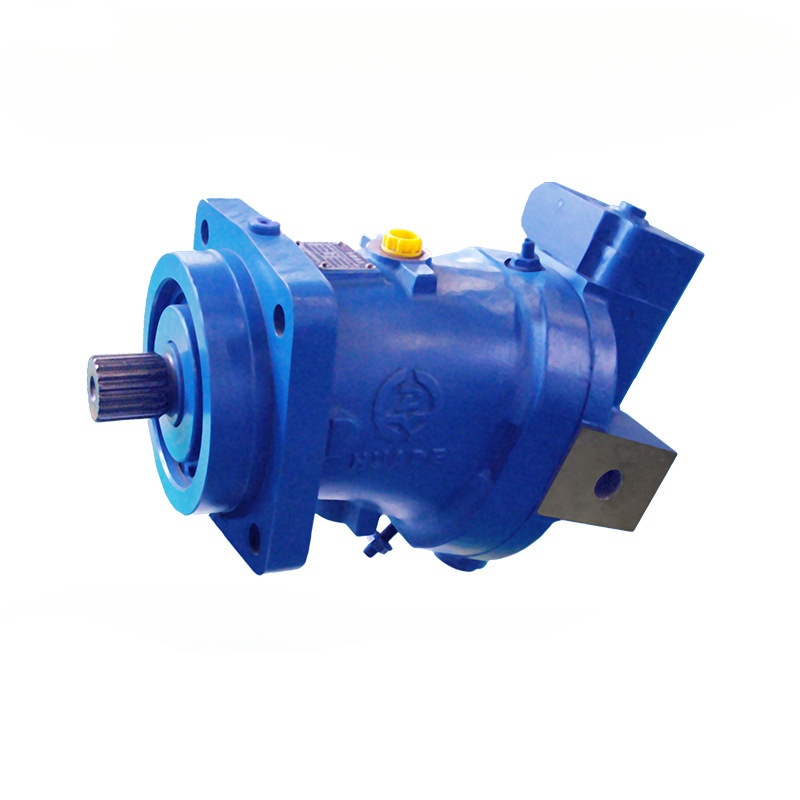



If you’ve ever walked up to a machine and felt a wave of heat radiating off the pump housing, you know that "sinking feeling." I’ve spent two decades troubleshooting these systems, and I can tell you: a hot pump is a screaming pump. In the hydraulic world, heat is just wasted energy—specifically, money that didn't turn into mechanical work. If your axial piston pump is overheating, you aren't just looking at a nuisance; you’re looking at a ticking time bomb for your ISO 4406 cleanliness standards and your bottom line.
The Quick Diagnostic: How Hot is Too Hot?
Before we tear the pump apart, we need to speak the same language regarding temperature. I always tell my junior techs to use an infrared thermometer—don't trust your hand. Anything over 180°F (82°C) is where the chemistry of your oil starts to fall apart.
| Oil Temp Range | Status | Action Required |
|---|---|---|
| 100°F - 140°F (38°C - 60°C) | Ideal | Normal operation. Keep an eye on your cooling fins. |
| 160°F - 180°F (71°C - 82°C) | Warning | Check your heat exchanger and oil viscosity index. |
| > 195°F (> 90°C) | Critical | Shut it down. You are likely facing massive internal leakage. |
Internal Leakage: The "Silent Thief" of Efficiency
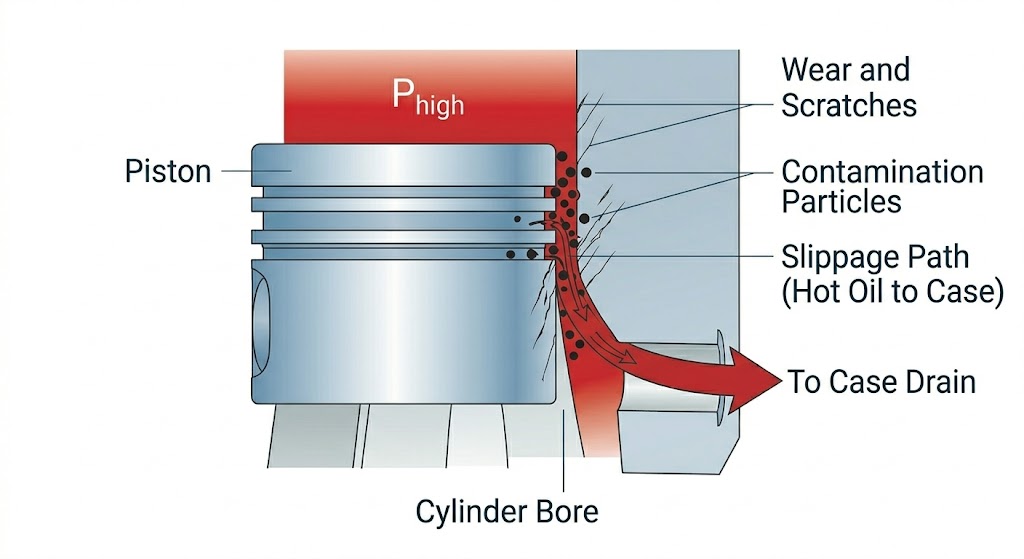
The most common reason a pump gets hot is internal leakage (often called "slippage"). Inside your pump, the cylinder block, valve plate, and pistons are fit together with clearances measured in microns. When these surfaces wear down due to contamination, high-pressure oil "slips" past the seals and heads straight back to the case drain.
When oil drops from 3,000 PSI down to 0 PSI in the case without doing any work, that pressure energy turns into pure heat. This is a thermodynamic law. I use this basic calculation to show the lost power:
$$P_{loss} (kW) = \frac{\Delta p (bar) \times Q_{leak} (L/min)}{600}$$If your Case Drain flow is higher than 3-5% of your total flow, that’s your heater. I’ve seen pumps where the case drain was so hot it literally cooked the shaft seal until it turned into brittle plastic.
Cavitation and Aeration: The "Marbles" in the Pump
If your pump sounds like it’s chewing on a handful of gravel, you’ve got a fluid dynamics problem.
- Cavitation: This happens when the intake is restricted (think of a clogged suction strainer). The oil "boils" at low pressure, forming bubbles that collapse violently when they hit the high-pressure side. These tiny implosions reach temperatures over 2000°F locally, pitting the valve plate and heating the oil.
- Aeration: This is when air leaks into the suction line. When those air bubbles get squeezed, they explode—a process called Micro-dieseling. It turns your oil black (oxidation) and spikes your temperature almost instantly.
Check your intake hose for soft spots or loose clamps. If your oil looks like a vanilla milkshake in the sight glass, you’ve got air in the system.
The Relief Valve Trap: A System Design Flaw
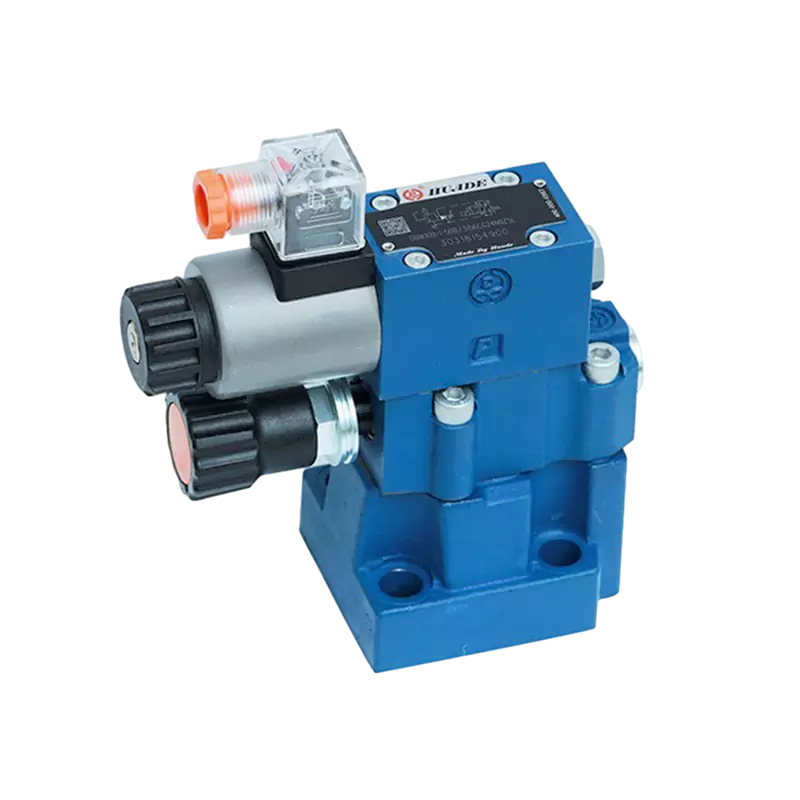
Sometimes the pump is perfectly fine, but the system is bullying it. In a pressure-compensated system, the pump is designed to "destroke" (go to zero flow) once it hits its pressure setting.
Here is a mistake I see all the time:- Someone sets the system relief valve at 2,900 PSI and the pump compensator at 3,000 PSI.
- The system hits 2,900 PSI.
- The relief valve opens.
- The pump thinks it hasn't reached its "limit" yet, so it keeps pumping at full blast.
All that high-pressure oil dumps over the relief valve, turning 100% of your motor's horsepower into heat.
Always set your relief valve at least 250 PSI (17 bar) higher than your pump's compensator setting.
Your "No-Nonsense" Maintenance Checklist
To keep your pump from melting down, follow these four steps every month:
- Check the Case Drain: Measure the flow. If it’s increasing over time, your slipper pads or cylinder block are wearing out.
- Clean the Heat Exchanger: A layer of dust on your cooler fins is like putting a winter coat on your machine in July.
- Sample the Oil: Look for Copper (Cu) in your lab report. High copper levels mean your bronze valve plate is being ground away.
- Inspect the Breather: If your reservoir can't "breathe," it creates a vacuum that leads to cavitation.