




I still remember the first time I heard a hydraulic piston pump suffering from severe cavitation. It sounded like someone was shaking a metal can full of marbles inside the machine. The operator thought the pump was just "working hard." I knew the internals were being chewed apart by micro-jets.
If you are reading this, you are likely in one of two spots: your machine is making a scary noise, or you are trying to figure out why these pumps cost five times more than a gear pump. I have spent 20 years designing and fixing hydraulic systems. Today, I’m going to skip the textbook fluff. We are going to look at the hydraulic piston pump through the eyes of an engineer.
The Core Physics: Why Use a Piston Pump?

Let's get one thing straight: Pumps do not create pressure. Pumps create flow. Pressure is just the resistance to that flow.
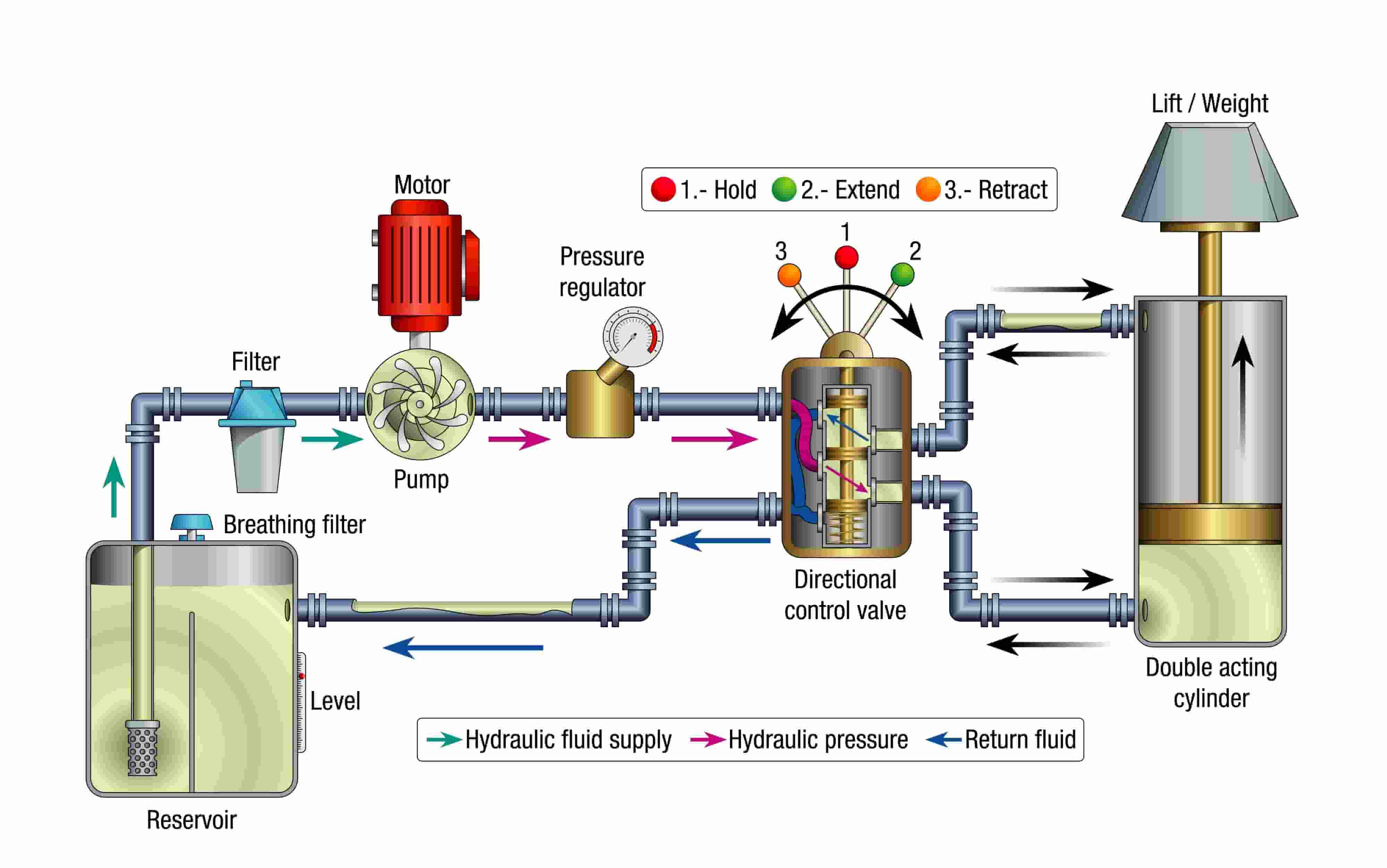
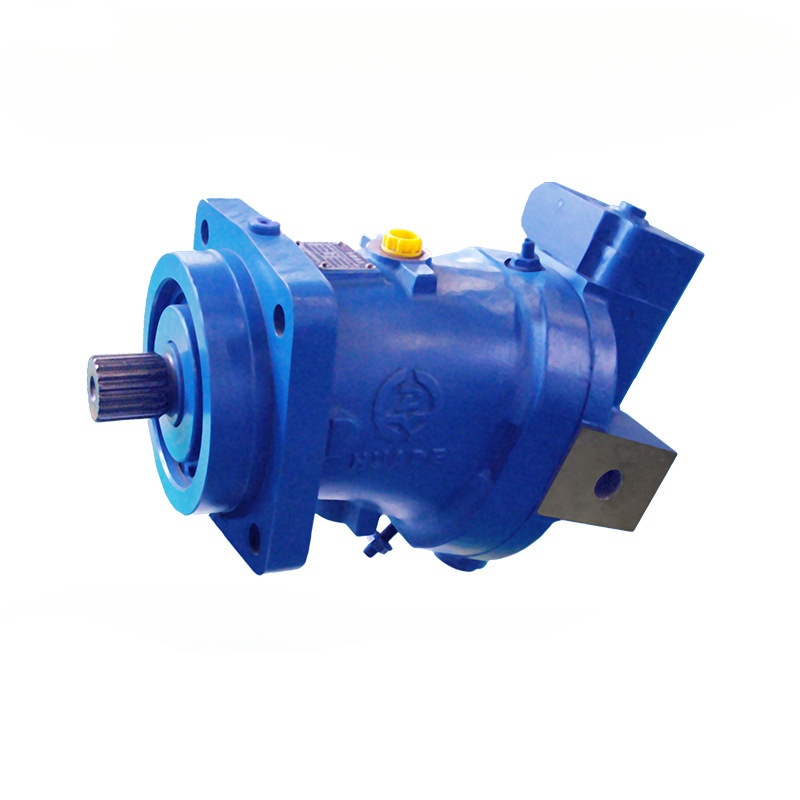
A hydraulic piston pump is a Positive Displacement Pump. Whether it is an axial (swashplate) or radial design, the physics are the same. A piston moves inside a cylinder bore. When it pulls back, it creates a vacuum that sucks oil in. When it pushes forward, it physically forces that oil out. Because the seal is metal-on-metal with microscopic clearance, the oil has nowhere else to go, allowing massive pressures (350+ bar).
The Formula You Need to Know
If you are calculating flow for a system design, this is the only equation that matters. It defines the relationship between the pump's size, speed, and efficiency:
$$ Q = \frac{V_g \cdot n \cdot \eta_v}{1000} $$
Where:
\( Q \) = Flow rate (L/min)
\( V_g \) = Geometric Displacement (cm³/rev)
\( n \) = Shaft Speed (rpm)
\( \eta_v \) = Volumetric Efficiency (typically 0.90 to 0.95)
Engineer’s Note: If your volumetric efficiency (\( \eta_v \)) drops below 80%, your pump is dying.
Gear vs. Vane vs. Piston: The Selection Matrix
Why spend $3,000 on a Rexroth A10VSO piston pump when a $300 gear pump moves the same amount of oil? It comes down to efficiency and control.
| Feature | Piston Pump (Axial/Radial) | Gear Pump (External) | Vane Pump |
|---|---|---|---|
| Max Pressure | High (350 - 700+ bar) | Low/Med (180 - 250 bar) | Medium (175 - 210 bar) |
| Volumetric Efficiency | Excellent (>95%) | Fair (85% - 90%) | Good (90%) |
| Noise Level | High (Requires damping) | Medium | Low (Best for indoor use) |
| Cleanliness Req. | Strict (ISO 18/16/13) | Forgiving (ISO 20/18/15) | Sensitive |
| Variable Displacement? | Yes (Load Sensing, Constant HP) | No (Fixed flow only) | Limited |
Troubleshooting: Diagnosing by Sound and Heat

You don't always need a flow meter to know a pump is failing. Your senses are your best diagnostic tools.
1. The "Marbles" Sound (Cavitation)
If the pump sounds like gravel is rattling inside, you have Cavitation. Vacuum bubbles implode on the high-pressure side, blasting micro-jets that pit the metal.
The Fix: Check suction strainer and hose.
Sounds like a screaming cat. Air is entering from the outside (loose clamp, bad shaft seal).
The Fix: Apply grease to fittings while running to find the leak.
If the case drain line is significantly hotter than the reservoir, you have excessive internal leakage. The oil film has failed, and friction is cooking your pump.
Critical Concepts: Hydrostatic Balance & Maintenance
How does a brass shoe slide on a steel plate at 5000 psi? A tiny hole drilled through the piston creates a "pool" of high-pressure oil under the shoe. This pressure pushes up, counteracting the piston force. The shoe floats on a film of oil microns thick.
- Pool too big: Shoe lifts, leakage spikes.
- Pool too small: Metal-on-metal contact, catastrophic failure.
Dirty oil is the silent killer. A 10-micron particle can jam a piston pump control valve (Silting). A healthy system needs ISO 18/16/13 or better. If your analysis shows 21/19/16, you are running a Ferrari engine on sand.
Next Steps: Check your Case Drain Filter. Brass flakes mean slipper failure; steel flakes mean bearing/block failure. Verify suction vacuum stays above 0.8 bar absolute.