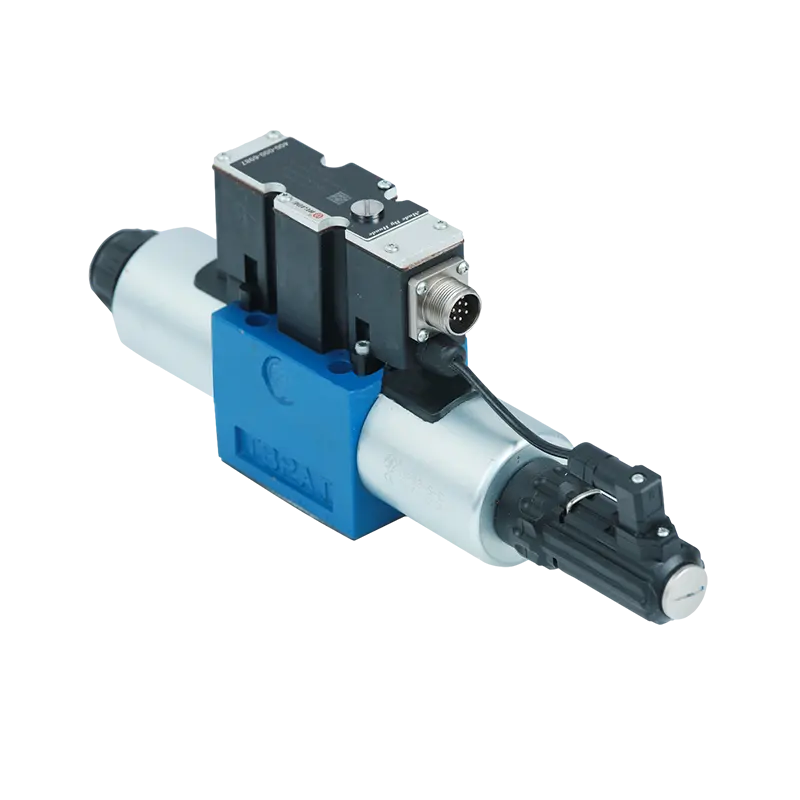


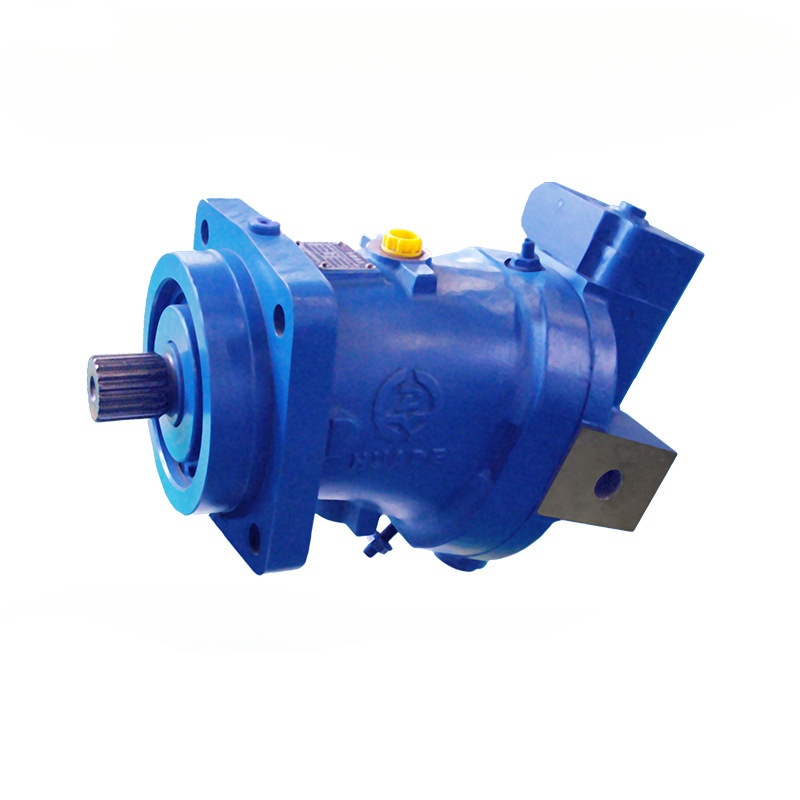

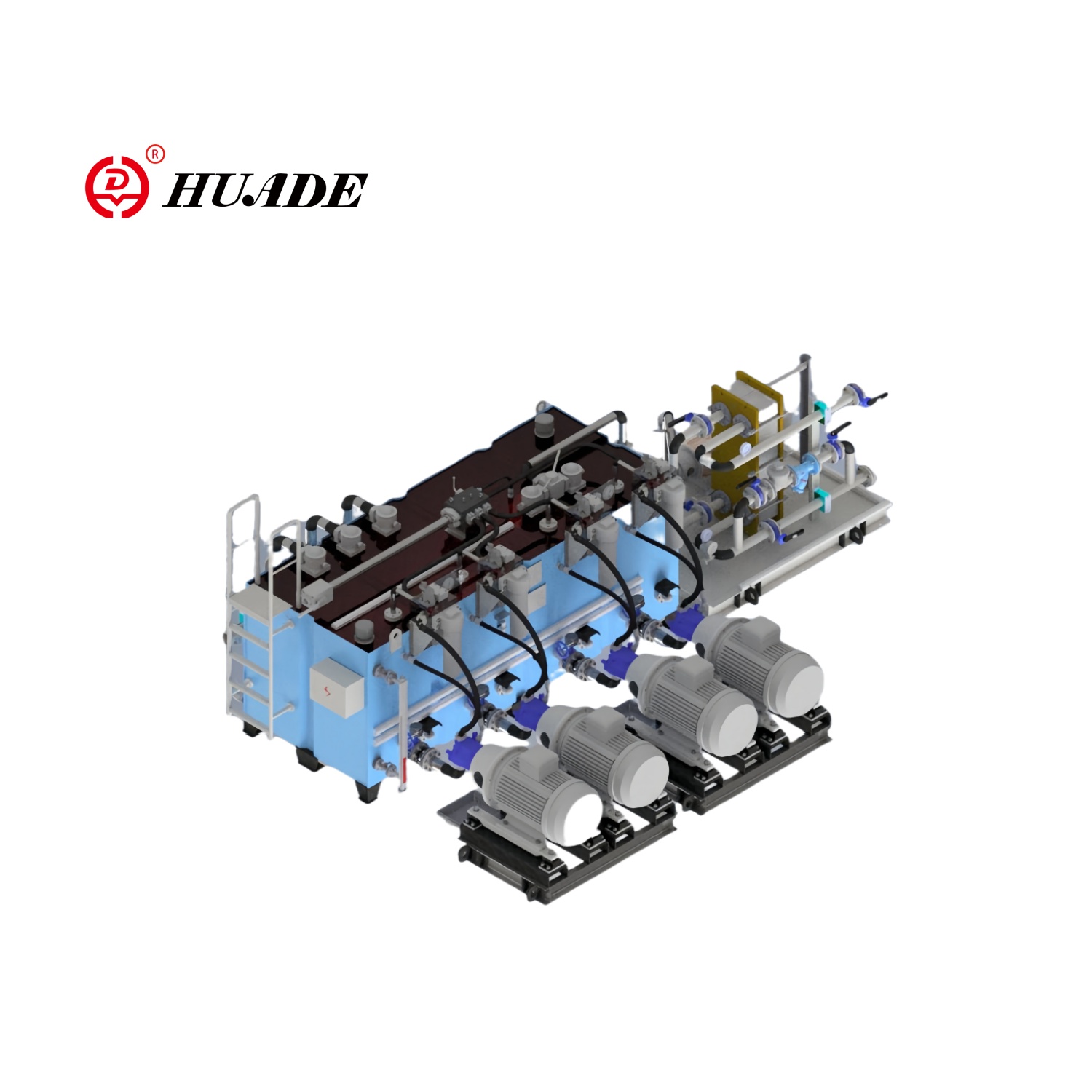


If you asked me to name the most common debate I’ve seen in hydraulic system design over the last 20 years, it’s this: "Do we really need a proportional valve here, or can we get away with a standard solenoid valve?"
I’ve seen projects go over budget because engineers over-spec’d expensive proportional valves for simple tasks. Conversely, I’ve seen machines shake themselves to pieces because someone tried to save money with a standard valve where smooth deceleration was critical.
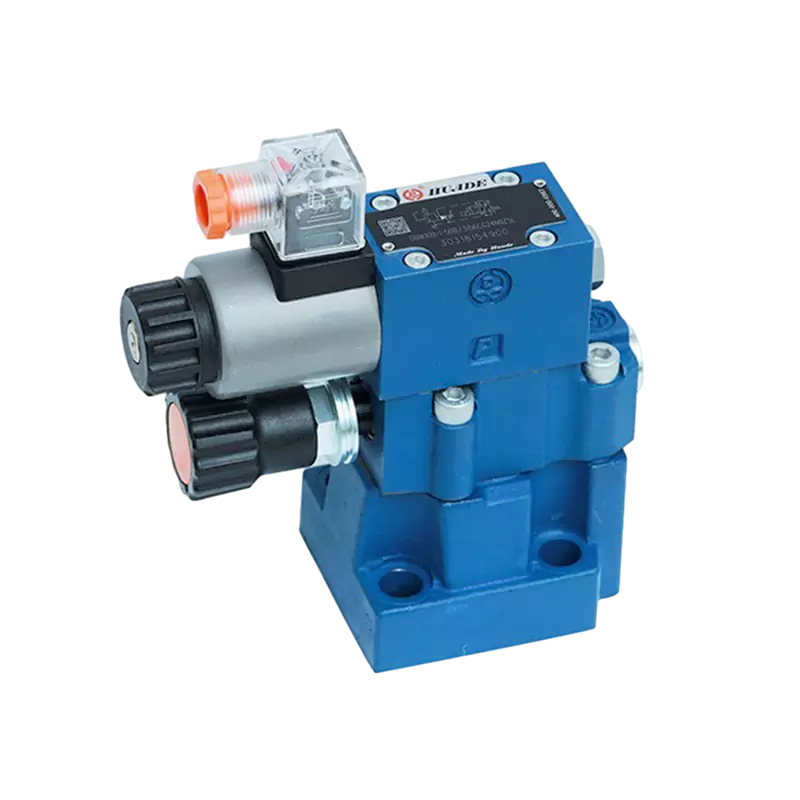
Non-Proportional (On/Off) Valves are like a light switch. It’s either 100% dark or 100% bright. There is no middle ground.
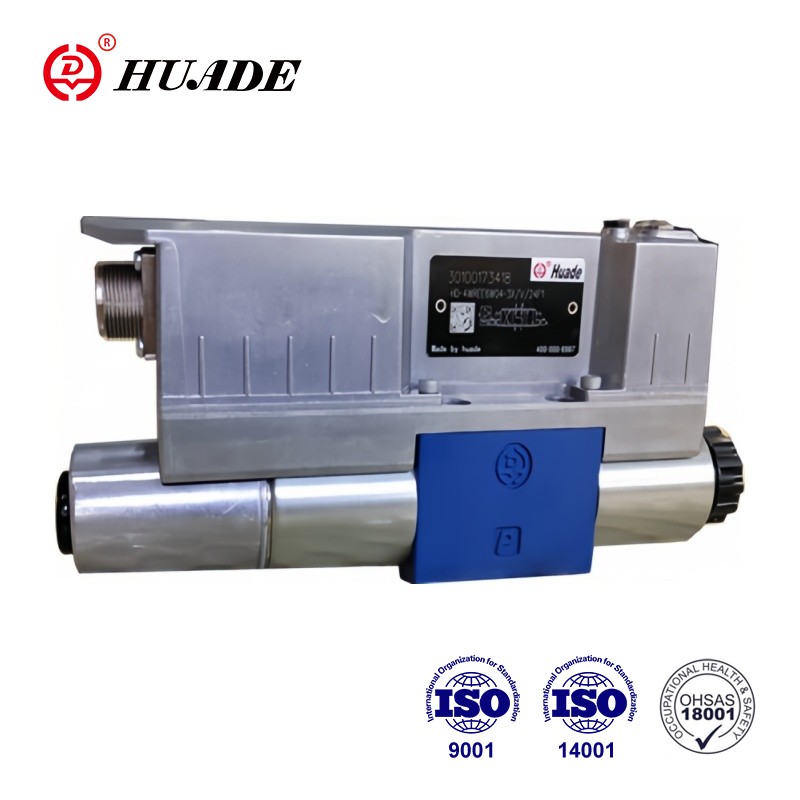
Proportional Valves are like a dimmer switch. You can dial in 10% brightness, hold it at 50%, or gently fade from 0% to 100%.
But in the industrial world, that "dimming" capability comes with a hefty price tag and a steeper learning curve. Here is the engineering reality behind the choice.
The "Cheat Sheet": Core Differences at a Glance
If you are in a rush or need to explain this to a procurement manager, use this comparison table.
| Feature | Non-Proportional (Bang-Bang) | Proportional Valve |
|---|---|---|
| Spool Movement |
Binary (Shifted/Unshifted) The spool slams fully open or stays closed. |
Infinite Positioning The spool can hover at any position between 0-100%. |
| Input Signal |
Digital / Discrete (0V or 24V DC) |
Analog (0-10V, 4-20mA, or PWM) |
| Control Capabilities | Direction only. | Direction, Speed (Flow), and Acceleration. |
| System Shock | High. Prone to "Water Hammer". | Low. Uses ramp functions for Soft Start/Stop. |
| Cost Index | $ (Low) | $$$-$$$$ (High) |
| Oil Cleanliness (ISO) | Tolerant (ISO 20/18/15) | Sensitive (ISO 17/15/12 required) |
The Physics: Why On/Off Valves "Bang" and Proportional Valves "Glide"

Why does a standard valve cause that distinct "clunk" sound in your pipes? It comes down to the Solenoid Physics.
The "Bang-Bang" EffectStandard directional valves use Variable Gap Solenoids. When you energize the coil, the magnetic force increases exponentially as the armature gets closer to the pole piece.
$$ F \propto \frac{1}{\text{distance}^2} $$Once the magnetic force overcomes the spring, the armature accelerates uncontrollably and slams into the end stop. The valve opens instantly, dumping full flow into the cylinder. This sudden surge causes pressure spikes—known as Hydraulic Shock—which damages seals, fittings, and sensors over time.
The Proportional SolutionProportional valves use Constant Force Solenoids and specially machined spools.
- The Solenoid: The magnetic force is proportional to the current, regardless of the armature position. If you send 50% current, the force balances against the spring exactly at 50% stroke.
- The Spool: Unlike the "square" lands of an on/off spool, proportional spools have V-Notches (Metering Notches). As the spool moves, these notches open a tiny flow path that gradually widens.
This allows you to program an S-Curve motion profile: start slow, accelerate smoothly, and decelerate gently before stopping.
The Hidden Costs: It’s Not Just the Valve
This is where I see most new engineers get tripped up. You cannot just swap a bang-bang valve for a proportional valve and expect it to work. You are buying into a more complex ecosystem.
1. Amplifier (Driver): You cannot wire these directly to a standard PLC output. You need a dedicated Proportional Amplifier that converts your voltage signal into a current signal using PWM (Pulse Width Modulation).
2. Tuning "Dither": Static friction (stiction) is the enemy of precision. To keep the spool moving freely, the amplifier injects a high-frequency vibration signal called Dither. If you don’t tune this frequency, your valve will either drift or hum loudly.
3. Filtration is Critical: The clearance between the spool and bore is measured in microns. If your hydraulic oil is dirty (e.g., ISO 4406 code above 19/17/14), you risk "Silting"—where fine particles jam the spool. You must upgrade your pressure filters.
Decision Guide: Which One Do You Need?

Don't over-engineer. Use this logic flow to make your decision.
Scenario A: "I just need the cylinder to extend and retract."
Choice: Non-Proportional (On/Off).
If speed control isn't critical (or if you can manually set a fixed speed with a cheap needle valve), stick to the standard valve. It is reliable, cheap, and easy to troubleshoot.
Choice: Proportional (Open Loop).
You need to control deceleration (Ramping). A basic proportional directional valve will allow you to slow down the flow right before the cylinder hits the end of the stroke.
Choice: Proportional with Feedback (Closed Loop).
Standard proportional valves have Hysteresis (a lag between the input signal and the response) of roughly 4-8%. For high precision, you need a high-performance valve with an onboard LVDT sensor that tells the controller exactly where the spool is.
The difference isn't just about "controlling flow." It's about controlling energy. Use Non-Proportional valves for holding, clamping, and simple transfer tasks where "full speed" is acceptable. Use Proportional valves when the quality of the motion matters—when you need to protect the load from shock or follow a complex speed profile.