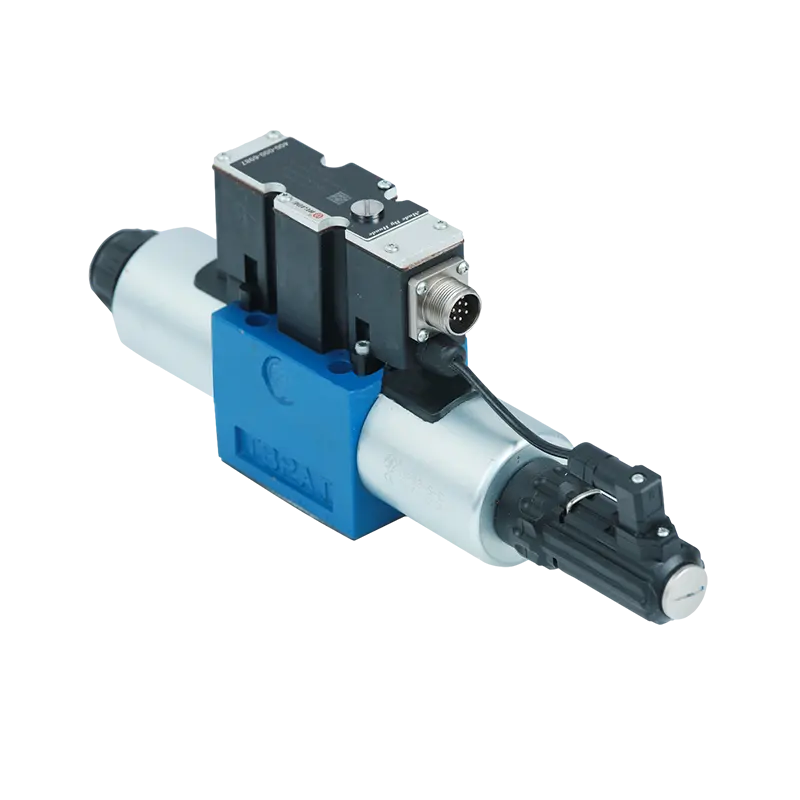





When fluid systems experience pressure fluctuations, maintaining consistent flow becomes a critical challenge. An automatic flow control valve solves this by mechanically adjusting its opening to compensate for pressure changes, delivering constant flow without electrical power or external control signals. This self-regulating capability addresses the persistent problem of hydraulic imbalance in HVAC systems, water treatment plants, and industrial process lines.
How Automatic Flow Control Valves Work
The core mechanism relies on a pressure-actuated cartridge inside the valve body. When upstream pressure increases, the differential pressure across an internal orifice rises. This pressure acts on a spring-loaded piston or diaphragm, compressing the spring and reducing the flow area. The relationship follows the fundamental flow equation:
$$ Q = K_v \cdot \sqrt{\Delta P} $$Where $Q$ is flow rate, $K_v$ is the flow coefficient, and $\Delta P$ is differential pressure. A manual valve maintains fixed $K_v$, causing flow to increase with pressure. An automatic flow control valve dynamically adjusts $K_v$ to keep $Q$ constant despite pressure variations.
Modern Construction: Modern designs often use PPSU (polyphenylsulfone) for the cartridge material. Unlike brass, PPSU resists scaling in hard water and does not corrode in chlorinated systems, preventing the seizing issues common in older metallic designs.
Types and Technical Classifications
| Type | Pressure Dependency | Control Signal | Flow Accuracy |
|---|---|---|---|
| Manual Balancing Valve | Highly dependent | None (fixed) | ±15% |
| Automatic Balancing (ABV) | Independent above min ΔP | None (preset) | ±5% |
| Pressure Independent (PICV) | Fully independent | 0-10V / 4-20mA | ±5% |
| Electronic Smart Valve | Closed-loop compensated | BACnet/Modbus | ±1% |
A PICV combines differential pressure regulation, flow control, and balancing in two stages:
- Stage 1 - Pressure Regulator: A diaphragm maintains constant differential pressure (typically 10-15 kPa) across the control element, regardless of system pressure fluctuations.
- Stage 2 - Control Element: Since the pressure drop is stabilized by Stage 1, the flow rate becomes linearly proportional to the valve opening position. This achieves 100% valve authority, eliminating the "low delta-T" syndrome common in HVAC coils.
Material Selection for Service Conditions
Body Materials: DZR Brass (CW602N) is standard for HVAC up to DN50 to prevent dezincification. For large bore valves (DN65+), Ductile Iron (GGG40/50) with epoxy coating is used. Stainless Steel 316 is essential for seawater or high-chlorine applications.
| Elastomer | Temperature Range | Compatible Media | Incompatible Media |
|---|---|---|---|
| EPDM | -40°C to +150°C | Hot water, glycol | Oil, hydrocarbons |
| FKM (Viton) | -20°C to +200°C | Petroleum, chemicals | Steam, hot water |
| PTFE | -200°C to +260°C | Universal resistance | None (inert) |
System Design Considerations
Sizing MethodologyNever select valve size based on pipe diameter. Automatic flow control valves must be sized strictly for flow rate.
Step 1: Calculate design flow rate using load and temperature differential:
$$ Q = \frac{\text{Load (kW)}}{C_p \times \rho \times \Delta T} $$Step 2: Ensure the valve operates within its working pressure range (typically 15-400 kPa).
Step 3: Select a body size where the design flow falls in the 60-90% range of the cartridge's capacity to prevent hunting or erosion.
Installation Best Practices
Filtration: Tight clearances in automatic cartridges make them sensitive to debris. A Y-strainer (20-40 mesh) upstream is mandatory.
Commissioning Protocol:
- Flushing: Remove cartridges or use flushing caps during initial system flush to prevent damage from welding slag.
- Air Purging: Ensure test ports face upward. Air pockets can severely affect pressure sensing accuracy.
Troubleshooting Common Issues
| Symptom | Probable Cause | Remedy |
|---|---|---|
| Flow below setpoint | System ΔP below minimum | Increase pump speed or reduce resistance |
| Flow below setpoint | Strainer clogged | Clean strainer basket |
| Oscillation (hunting) | Valve oversized | Replace with smaller valve (operate >30% open) |
| Noise / Vibration | Cavitation | Check if $\Delta P > 0.5 \times P_{inlet}$ |
Market Evolution and Digital Integration
The industry is shifting towards IoT-Enabled Smart Valves. These devices offer cloud data logging to identify underperforming zones and predictive maintenance algorithms that analyze vibration signatures to predict seal wear. Emerging research into energy harvesting aims to use fluid flow to power these sensors, enabling truly maintenance-free wireless deployment.
For system designers, selecting an automatic flow control valve is an investment in lifecycle efficiency. Savings from reduced commissioning labor and lower pump energy typically achieve payback within 1-2 years.