




Installing a hydraulic flow control valve correctly determines whether your cylinder extends smoothly or your motor seal blows out during the first test run. The connection method—meter-in, meter-out, or bleed-off—affects system stiffness, heat generation, and load handling capacity. This guide covers port identification, circuit topology selection, directional arrow interpretation, and the pressure intensification risks that destroy hoses in meter-out applications.
Understanding Flow Control Valve Types and Their Connection Requirements
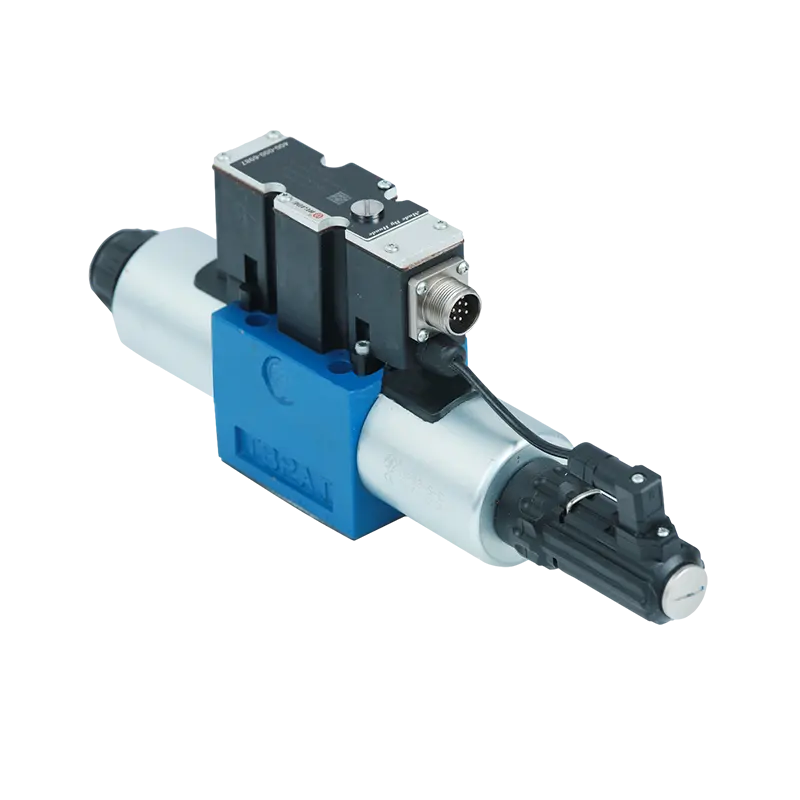
Before you grab a wrench, identify which type of valve you're dealing with. Non-compensated needle valves and pressure-compensated flow controls require different hookup considerations.
Non-Compensated Throttle ValvesSimple needle valves regulate flow through an adjustable orifice. Flow follows the equation:
$$Q = C_d \cdot A \cdot \sqrt{\frac{2 \cdot \Delta P}{\rho}}$$
Where $Q$ is flow rate, $A$ is orifice area, and $\Delta P$ is the pressure drop across the valve. The square root relationship means load changes directly affect actuator speed. When the cylinder pushes against increasing resistance, outlet pressure rises, reducing $\Delta P$ and slowing the actuator. This load sensitivity limits needle valves to applications with constant loads or low precision requirements.
These valves add a compensator spool that maintains constant $\Delta P$ across the metering orifice regardless of load changes. The compensator automatically adjusts its opening to keep pressure differential fixed, making output flow dependent only on orifice setting.
Check Valve Integration (One-Way Flow Controls)Many flow control valves include a parallel check valve that allows free flow in the reverse direction. The check valve direction determines which actuator stroke gets controlled.
Critical Installation Rule: The arrow on the valve body typically indicates either "controlled flow" or "free flow" direction depending on the manufacturer. If you install this backwards, the intended controlled stroke runs at full speed while the opposite stroke crawls.
Three Core Circuit Strategies: Where to Hook Up the Valve

The valve's position in the circuit—not just the physical connection—defines system behavior. Engineers use three standard topologies: meter-in, meter-out, and bleed-off.
1. Meter-In Control (Inlet Throttling)Connection Location: Install the flow control valve in series between the pump and actuator inlet port. For cylinder extension, hook it up on the cap end (blind side) line.
Critical Limitation: Never use meter-in alone for overrunning loads. When a cylinder lowers a heavy load, the load pulls the piston faster than restricted inlet flow can supply oil, causing "load runaway" and cavitation.
2. Meter-Out Control (Outlet Throttling)Connection Location: Hook up the flow control valve in series between the actuator outlet and tank. For cylinder extension control, install it on the rod end (piston side) return line.
Industry Rule of Thumb: "If in doubt, meter out." Meter-out delivers superior motion control because back pressure eliminates the stick-slip phenomenon that causes jerky movement at low speeds.
This is the hidden danger in meter-out hookups. In differential cylinders, when extending with meter-out control, rod side pressure can spike to dangerous levels.
Force balance equation with overrunning load: $$P_2 = \frac{P_1 \cdot A_1 - F_{load}}{A_2}$$
The Risk: For a 2:1 area ratio cylinder, if system pressure is 3000 psi, the rod end can see 6000+ psi. Standard 3000 psi hoses will fail catastrophically. Always verify rod-end component ratings before hooking up meter-out circuits.
Connection Location: Install the flow control valve in a branch line (tee fitting) off the main pump-to-actuator line, with valve outlet going directly to tank.
| Circuit Type | Connection Point | Load Capability | Motion Quality |
|---|---|---|---|
| Meter-In | Inlet line (series) | Resistive only | Moderate |
| Meter-Out | Outlet line (series) | Resistive + Overrunning | Excellent |
| Bleed-Off | Branch line (parallel) | Constant load only | Poor (High Efficiency) |

Connecting to the wrong port or installing the valve backwards causes most hookup failures. Read the valve body carefully before making connections.
- P (Pressure) or IN: Connects to pump supply or high pressure source.
- T (Tank) or OUT: Return to reservoir. In bleed-off, this is the dump port.
- CF (Controlled Flow): On priority valves, delivers constant metered flow.
- EF (Excess Flow): Bypass port sending surplus flow to tank.
Interpreting Arrow Markings: Valve bodies typically have cast arrows. Common error: On cylinder speed control, if the arrow points the wrong way, the check valve bypasses the orifice during the stroke you're trying to control.
Step-by-Step Hookup Procedures
Safety Preparation- Depressurize: Cycle directional valves to relieve trapped pressure. Verify zero pressure with gauges.
- Cleanliness: A single grain of sand can jam a compensator spool. Clean fittings before removal.
- Injection Risk: Never use hands to search for leaks. Pinhole leaks can inject fluid through skin.
Step 1: Locate Rod End Port.
Step 2: Determine Check Valve Orientation. During extension, oil flows FROM rod end. Install valve so check valve is CLOSED during extension.
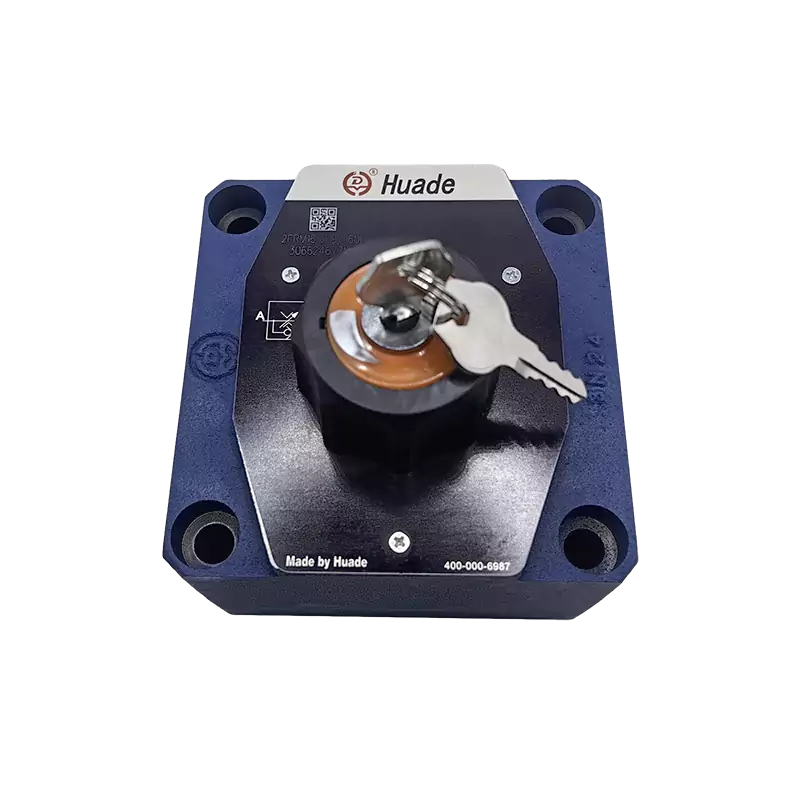
Step 3: Initial Adjustment. Turn knob fully closed, then back out 1-2 turns. Never start wide open.
Commissioning and Troubleshooting
After hookup, proper startup and tuning optimize performance and reveal installation errors before they cause damage.
| Symptom | Probable Cause | Verification and Fix |
|---|---|---|
| Speed not adjustable | Check valve installed backwards | Reverse valve orientation. |
| Jerky motion (stick-slip) | Meter-in with low back pressure | Switch to meter-out configuration. |
| Load drops uncontrollably | Meter-in on overrunning load | Stop immediately. Redesign as meter-out. |
| Motor shaft seal leaking | Meter-out without case drain | Install dedicated case drain line to tank. |
Final Installation Checklist
Before pressurizing a newly-hooked-up system, verify:
Run through initial startup at reduced pressure (30-50% of system maximum) and verify correct actuator motion before tuning to final operating speed.