




If you’ve ever tried to control a heavy hydraulic cylinder with a standard directional valve, you know the drill. It’s binary. It’s either moving at full speed, or it’s stopped. The shock—the "water hammer"—shakes the whole machine.
For 20 years, I’ve seen engineers try to fix this with flow controls and accumulators. But the real solution is usually moving from "Bang-Bang" (switching) valves to Proportional Valves. You aren’t just looking for a textbook definition. You need to know how the electrical signal physically moves the spool, why your PLC needs to send a specific type of signal, and why the valve sometimes acts "sticky" (hysteresis).
Here is the engineer-to-engineer breakdown of how proportional valves actually work, without the fluff.
The Core Concept: It’s All About "Force Balance"

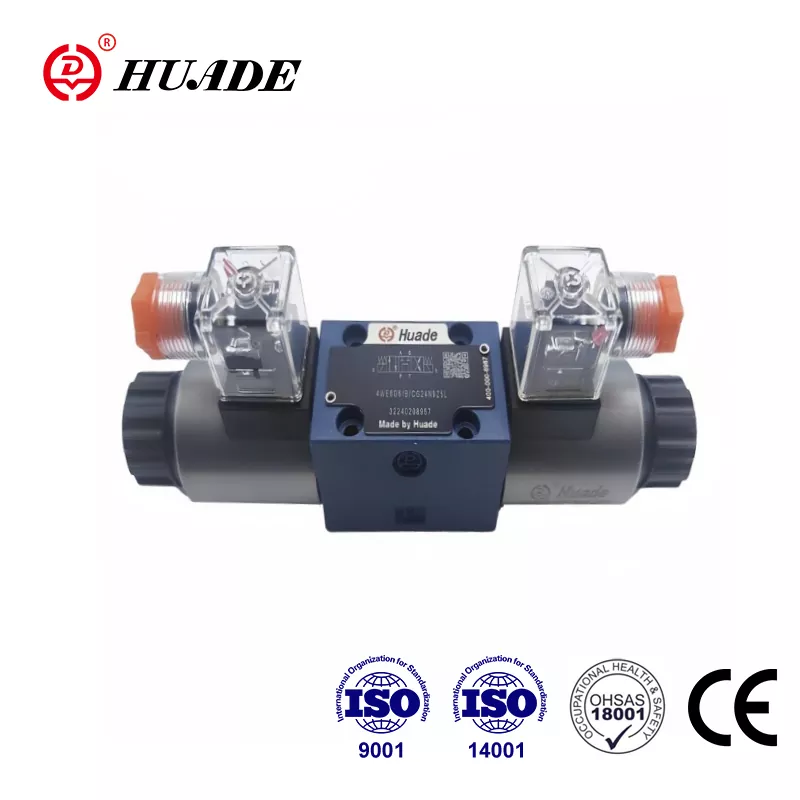
To understand a proportional valve, you have to forget how a standard solenoid valve works. In a standard valve, the solenoid is just a magnet. You energize it, the force spikes, and it slams the spool to the end of the stroke. It’s an all-or-nothing affair.
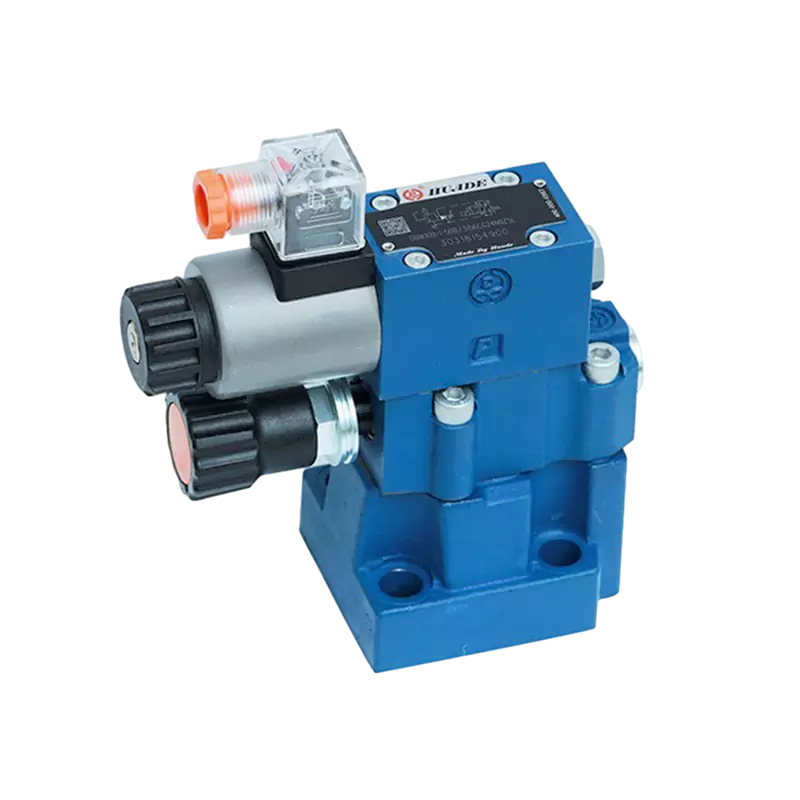
In a Proportional Valve, the solenoid is designed differently. It uses a Control Cone shape to shape the magnetic field. This creates a linear relationship between the current you send and the force it generates.
- Input Signal: Your PLC sends a command (e.g., 5V or 12mA).
- Force Generation: The solenoid creates a specific force (say, 40 Newtons).
- Spring Compression: This force pushes the spool against a calibrated spring.
- The Sweet Spot: The spool moves only until the spring force equals the magnetic force (\(F_{mag} = F_{spring}\)).
If you increase the current slightly, the force increases slightly, and the spool moves a tiny bit further. You are balancing magnetic force against spring force.
The Spool Design: The "Notches" Matter
If you pull a proportional valve spool out, you’ll notice the lands aren’t sharp. They have V-grooves or U-notches cut into them. This is called the Metering Notch.
- Small movement: Only the tip of the "V" opens. Tiny flow.
- Large movement: The wide part of the "V" opens. Massive flow.
This geometry defines the Flow Gain. For a crane, we use "Progressive" spools (slow start, fast finish). For a CNC machine, we use "Linear" spools.
The Invisible Electronics: PWM and Dither
This is where 90% of troubleshooting issues happen. You cannot just hook a proportional valve to a DC battery and expect it to work well.
Solenoid coils get hot. As copper heats up, resistance rises ($R \uparrow$). If voltage is constant ($V=IR$), current drops ($I \downarrow$), and since force comes from current ($F \approx i$), your valve gets weaker.
We use Current-Controlled PWM amplifiers. They monitor current 1000+ times a second and automatically boost voltage to keep Current (and Force) constant.
Have you ever seen a valve that won’t move until you give it 20% signal, and then it suddenly jumps? That’s Static Friction (Stiction).
To fix this, the amplifier adds a "Dither" signal—a high-frequency vibration (40-200Hz) superimposed on the control signal. It keeps the spool constantly vibrating, turning "Static Friction" into lower "Dynamic Friction."
Proportional Valve vs. Servo Valve: The Selection Guide
I get asked this weekly: "Can I save money by using a proportional valve instead of a servo valve?" Usually, the answer is yes.
| Feature | Proportional Valve | Servo Valve |
|---|---|---|
| Working Principle | Force Controlled (Solenoid) | Flow/Pressure Controlled (Nozzle) |
| Clearance (Fit) | 3-5 microns (Positive Overlap) | 1-2 microns (Zero Overlap) |
| Filtration | ISO 18/16/13 (Forgiving) | ISO 15/13/10 (Sensitive) |
| Hysteresis | 3% - 7% | < 0.5% |
| Response (-3dB) | 10 Hz - 50 Hz | 50 Hz - 200 Hz+ |
The Takeaway: Unless you are building a flight simulator or a high-frequency fatigue tester, a Closed-Loop Proportional Valve (with LVDT) is precise enough and much more robust.
Troubleshooting: Why is my valve "Dead"?

When a proportional system acts up, check these three phenomena first.
1. The "Deadband" (Dead Zone)
Most valves have Positive Overlap. For the first ±10% of signal, the spool moves but no oil flows.
Fix: Adjust "Deadband Compensation" or "Min Jump" in your driver card.
The difference in flow ramping up vs. ramping down.
Fix: Usually mechanical friction. Check Dither settings. Spool might be varnished.
Proportional valves act like dirt magnets. Particles build up in the clearance gap while throttling.
Fix: Pressure filters (non-bypass) are mandatory. Aim for ISO 18/16/13.