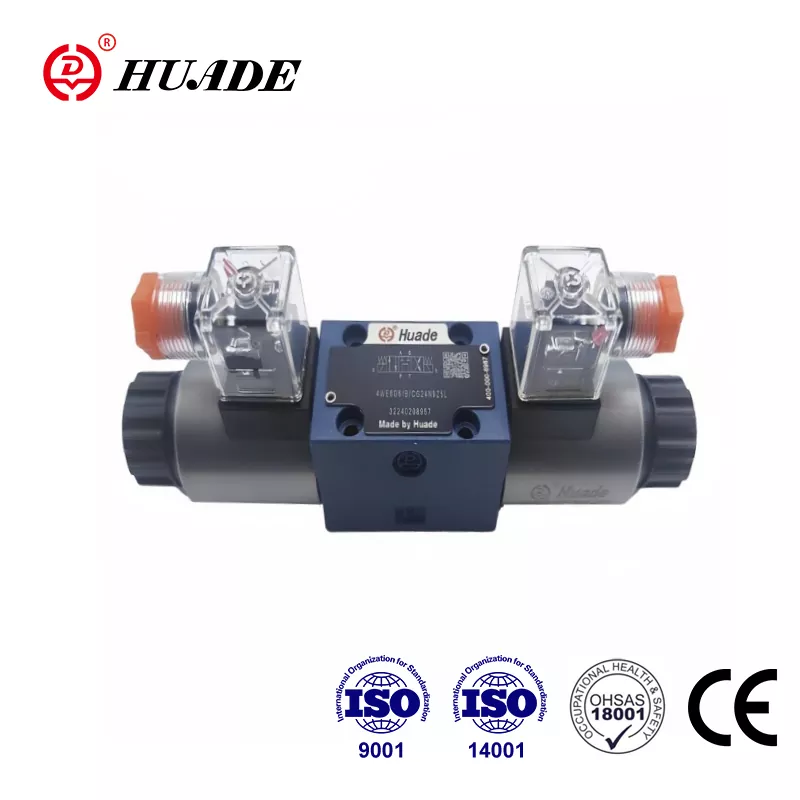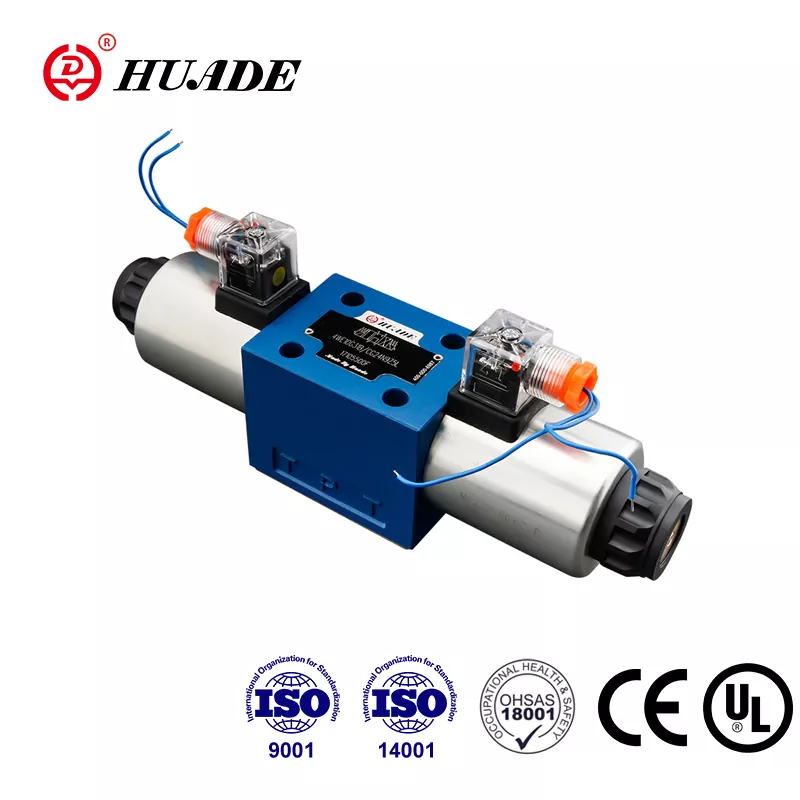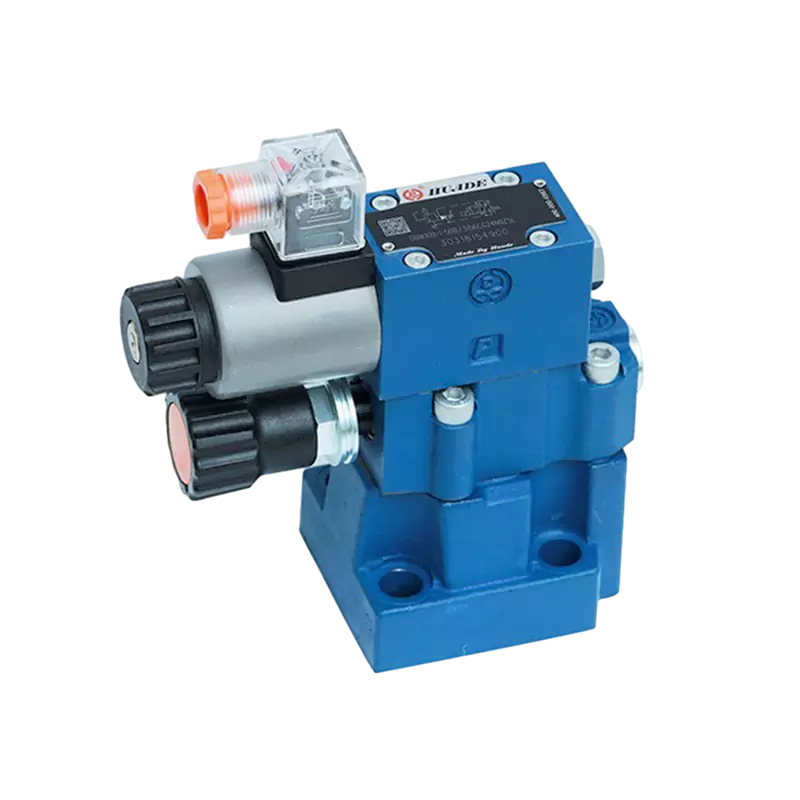
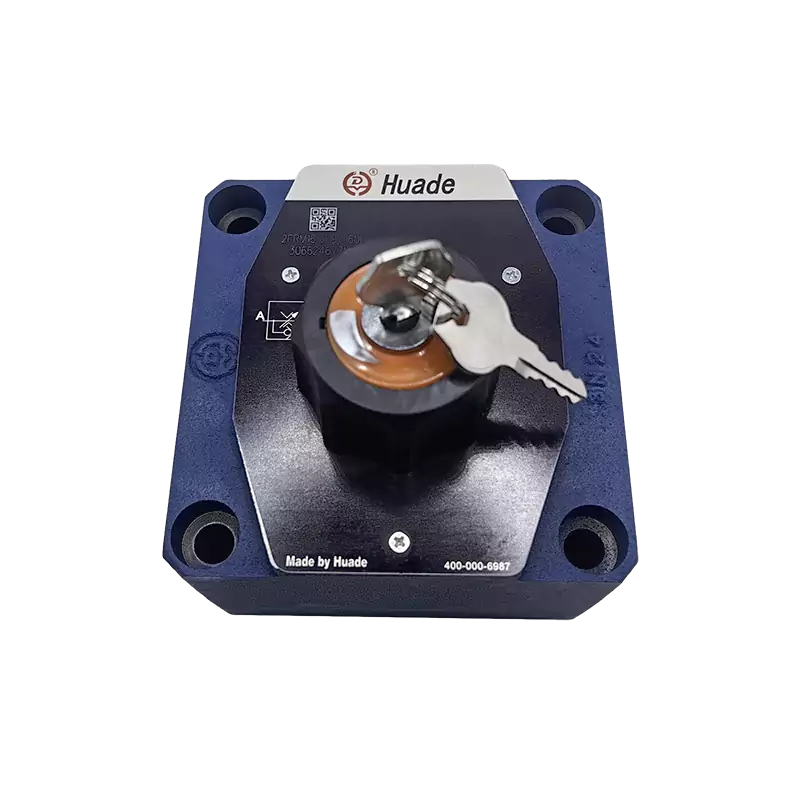
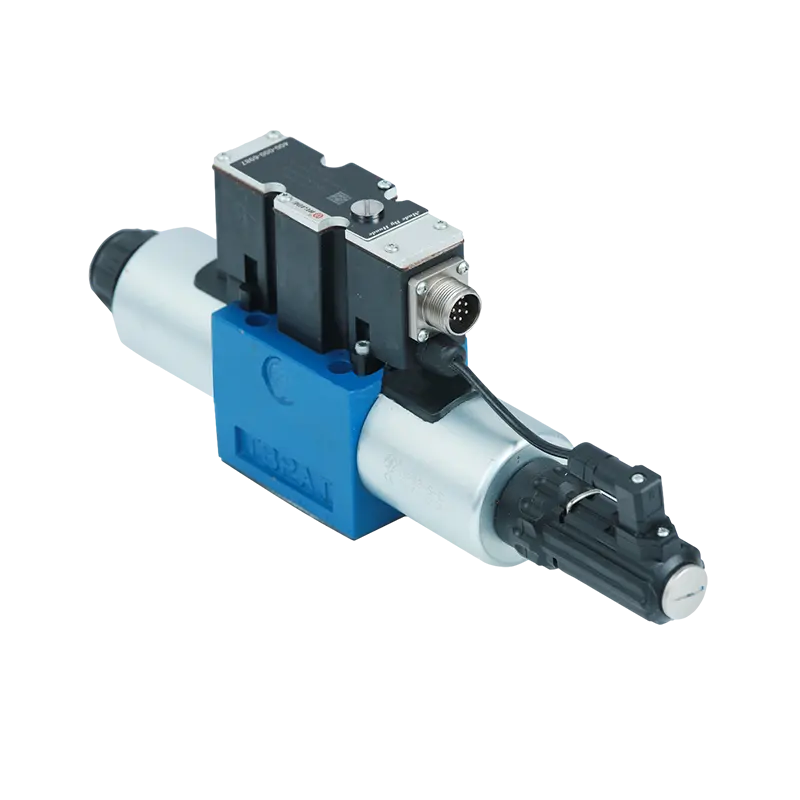





You are standing in front of a new hydraulic schematic, or perhaps looking at a quote that made your jaw drop. You see a standard solenoid valve for $50, and next to it, a proportional valve option for $500 (plus a driver card). Is the proportional valve worth the 10x price hike?
I’ve spent 20 years designing fluid power systems, and I’ve seen engineers make the same mistake twice: they either buy the cheap solenoid and get terrible "water hammer" shocks, or they overspend on a proportional system they don't actually know how to program. Let’s strip away the marketing fluff.
The "Light Switch" Analogy: Understanding the Physics

Solenoid Valve = The Light Switch. It has two states: On (100%) or Off (0%). You cannot get "half" light. It is fast, abrupt, and simple.
Proportional Valve = The Dimmer Switch. You can dial it to 10%, 53%, or 99% brightness. It is smooth and precise, but the internal mechanism is far more complex.
When you energize a standard solenoid coil, you trigger the "Avalanche Effect." According to Maxwell’s formula, the attraction force \( F \) increases inversely with the square of the air gap distance \( x \):
$$ F = \frac{(N \cdot I)^2 \mu_0 A}{2 x^2} $$As the armature moves closer, the force skyrockets exponentially. This means the valve snaps open. It physically cannot "hover" in the middle. This is why you hear that distinct "Click-Bang" sound.
The Physics of the "Hover" (Proportional)To get a valve to "hover" at 50% open, we have to fight physics. Proportional valves use a Conical Pole Piece and a magnetic isolation ring to create a "force plateau" where force is proportional only to current (\( I \)), not distance.
$$ x \approx \frac{k_1}{k_2} \cdot I $$This allows the valve spool to balance perfectly against a spring at any position you choose, requiring manufacturing tolerances in the 1-3 micron range.
The Hidden Costs: It’s Never Just the Valve

This is where most projects go over budget. You aren't just buying a different valve; you are buying a different ecosystem.
| Feature | Solenoid Valve (On/Off) | Proportional Valve (Throttling) |
|---|---|---|
| Primary Function | Safety shut-off, End-to-end movement. | Speed control, Pressure profiling, Soft-start. |
| Control Signal | Simple 12V/24V/110V (Bang-Bang). | 0-10V, 4-20mA, or CAN Bus. |
| Required Electronics | None (or a simple relay). | Must have a Driver Card. Needs PWM. |
| System Cost Index | $ (Low) | $$$$ (High - Valve + Driver + Programming) |
A proportional valve needs a PWM (Pulse Width Modulation) signal. If you feed it straight DC voltage, the spool will get stuck due to "stiction."
Good drivers add a "Dither" signal—a high-frequency vibration (100-400Hz) that keeps the spool dancing microscopically. This eliminates static friction, reducing Hysteresis from 10% down to <3%.
Troubleshooting: Water Hammer and Deadband
The Solenoid Problem: Water HammerBecause solenoids close in 10-30ms, they stop fluid instantly, creating a pressure spike (shock wave) that travels back through your pipes.
The Fix: Look for a "Soft-Shift" solenoid valve. It uses a restrictive orifice to slow the spool down, acting like a poor man's proportional valve for a fraction of the price.
The Proportional Problem: DeadbandWhen you send 1V to a proportional valve, nothing happens because of the Overlap (Deadband). To prevent internal leakage, spools cover ports by 15-20%. You might need to send 2.5V before oil flows. You must program your PLC to "jump" over this dead zone.
Decision Matrix: Which One Do You Need?
| Scenario | Recommended Valve | Why? |
|---|---|---|
| Emergency Stop | Solenoid (Direct Acting) | Reliability. Spring snaps shut instantly. |
| Motor Speed Control | Proportional | You need to vary flow ($Q$) to change RPM. |
| Preventing Shock | Proportional OR Soft-Shift | Use Soft-Shift for simple soft stops. |
| Cylinder Positioning | Servo-Proportional | Requires Zero Overlap and LVDT feedback. |
Summary: Buy Solenoid if you need simple, reliable clamping. Buy Proportional if you need to control acceleration rates dynamically. If you're dealing with hydraulic shock but can't afford proportional, send me your part number—a Soft-Shift valve might be your perfect drop-in solution.