




If you've ever worked with high-pressure hydraulics, you know that an axial piston pump is more than just a source of flow. It’s a precision instrument. The most common question I get from junior engineers is: "How exactly do we change the flow without changing the motor speed?"
The short answer is geometry. We change the distance the pistons travel. But if you're designing a system or troubleshooting a machine on the shop floor, you need to understand the mechanical "how" and the logical "why."
The Core Physics: It’s All About the Stroke
In an axial piston pump, "displacement" is the volume of oil pushed out in one full revolution. Since the number of pistons and their diameter are fixed, the only way to vary the output is to change the stroke length (\( S \)). Think of it like a bicycle pedal. If you push the pedal a full 180°, you move the bike a certain distance. If you only move it 10°, you barely move at all.
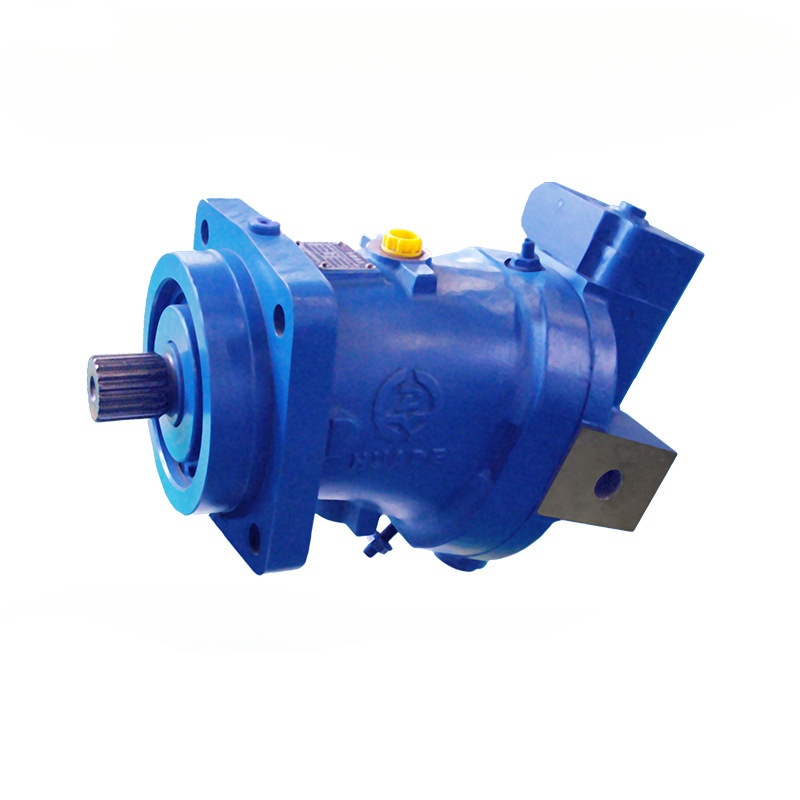
The Swash Plate Mechanism (Straight Axis)In most industrial pumps (like the Rexroth A10VSO), the pistons ride against a Swash Plate. This plate can tilt. When the plate is flat (0° angle), the pistons don't move back and forth as the block spins. Displacement is zero. As you tilt the plate, the pistons are forced to travel further in and out of the cylinder bores.
The mathematical relationship is governed by this formula:
$$ S = D \cdot \tan(\alpha) $$- \( S \) is the piston stroke.
- \( D \) is the piston pitch circle diameter.
- \( \alpha \) is the swash plate angle.
In a Bent Axis pump (like the Parker F12), there is no swash plate. Instead, the entire cylinder block tilts relative to the drive shaft. This design allows for a much larger angle—sometimes up to 45°—which gives you a higher power-to-weight ratio. The stroke here follows a sine function:
$$ S = D \cdot \sin(\alpha) $$How We Move the Metal: Actuation Methods
We don't just reach inside and move the plate by hand. We use Controllers.
- Manual Control: A simple handwheel or lever. Good for static setups where you rarely change the flow.
- Hydraulic Servo Piston: This is the industry standard. A small internal piston uses system pressure to push the swash plate. I’ve seen these move from zero to full flow in under 50 milliseconds.
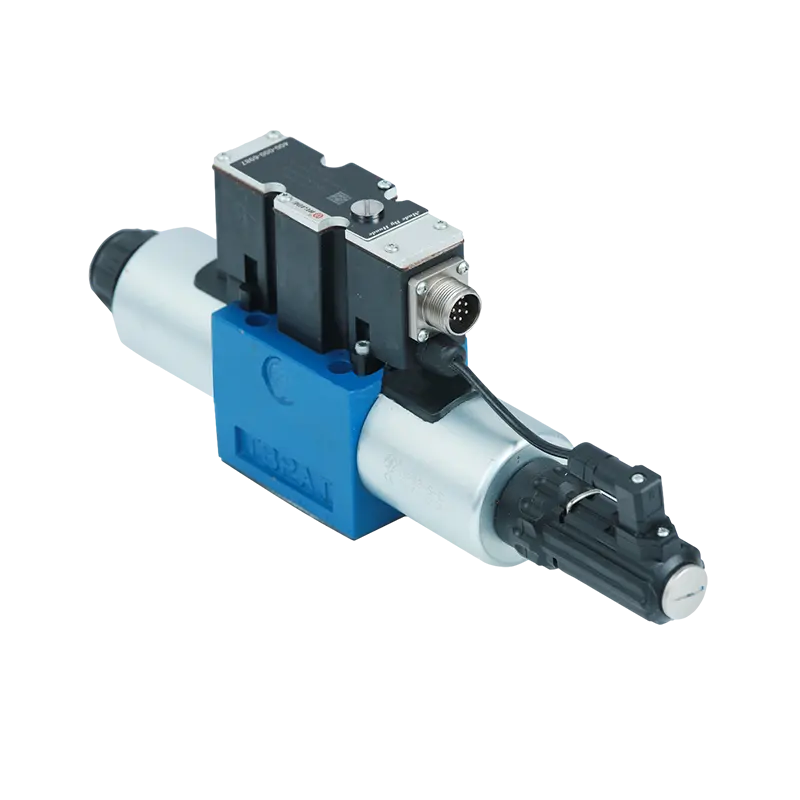
- Electric Proportional Control: We use an EP Valve (Solenoid) to move the servo piston. This allows a PLC or computer to "drive" the pump, which is vital for robotics and high-end injection molding.
Control Logic: The "Brains" of the Pump
Varying displacement is pointless if the pump doesn't know when to change. Here are the three logic modes that run 90% of the systems I've worked on:
1. Pressure Compensation (DR)The pump stays at maximum displacement until the system hits a preset pressure (e.g., 250 bar). At that point, the pump destrokes to almost zero flow. It only moves enough oil to maintain that 250 bar. This prevents heat buildup and protects the motor.
2. Load Sensing (LS)This is the "Gold Standard" for efficiency in excavators and mobile cranes. The pump "feels" the load pressure through a pilot line. It maintains a constant pressure margin (usually 14 to 20 bar) above the load. If you aren't using the joysticks, the pump goes to "Low Pressure Standby," saving massive amounts of fuel.
3. Torque Limiting (LR)Also called Constant Power Control. It follows a hyperbolic curve where \( P \times Q = \text{Constant} \). As pressure goes up, flow automatically goes down to ensure you don't stall the diesel engine or trip the circuit breaker on your electric motor.
Comparison of Adjustment Methods
To help you decide which setup fits your project, I've mapped out the pros and cons below:
| Control Type | Key Benefit | Main Drawback | Best Application |
|---|---|---|---|
| Pressure Comp (DR) | Prevents system overload | High heat during dead-head | Clamping, Presses |
| Load Sensing (LS) | Extreme fuel efficiency | Requires complex valve logic | Mobile Equipment, Cranes |
| Electronic (EP) | Total automation control | High initial cost | Industry 4.0, Robotics |
When you are varying the displacement, the internal parts are constantly moving. This generates heat and internal leakage. That leakage must escape through the Case Drain. If your drain line is restricted, the pressure inside the pump housing will rise. I’ve seen $15,000 pumps destroyed because someone used a drain hose that was too small, causing the Shaft Seal to blow or the pistons to "lift" off the swash plate. Always ensure your case pressure stays below 2 bar (absolute) to keep the lubricating oil film intact.