




You are standing in your yard, wrench in hand, staring at a black plastic valve box. You see wires, a solenoid, and right in the center of the valve, a small handle (usually a cross, a knob, or a slotted screw). Is that handle the master switch? Will turning it blow up your pipes? Or will it finally fix that one sprinkler head that sprays like a fog machine?
As an engineer who has designed irrigation networks for golf courses and residential complexes for two decades, I can tell you: The Flow Control Handle is the most misunderstood feature on your system. Here is the no-nonsense guide on how to use that knob to save water, stop "misting," and save your system from self-destruction.
Anatomy 101: Which Knob is Which?
Before you start twisting things, let's make sure you are grabbing the right part. A typical irrigation valve (like a Rain Bird PGA or Hunter ICV) has three main interactable parts:
- The Solenoid: The cylinder with wires coming out. (Don't twist this unless you want to manually turn the water on).
- The Bleed Screw: A tiny screw on the side. (Used for manual flushing).
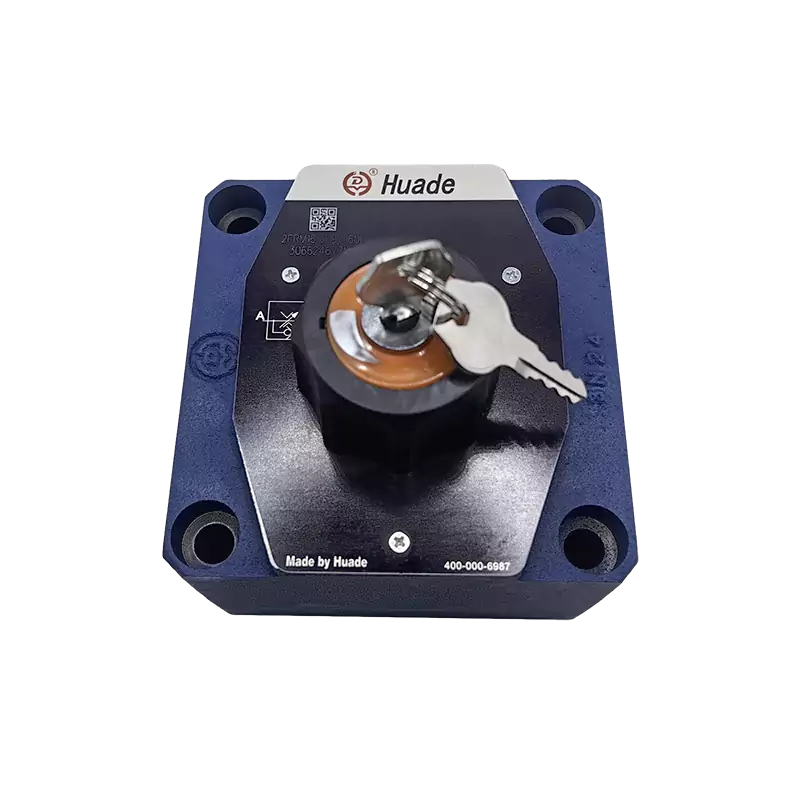
- The Flow Control Stem: The handle dead center on top of the valve.
Think of the Flow Control handle as a "Physical Ceiling." Inside the valve, there is a rubber diaphragm that moves up and down to let water through. When you turn the flow control handle down, you are literally lowering a metal stem that prevents the diaphragm from opening all the way. It restricts how "high" the gate can open.
The Golden Rule: Clockwise to "Choke"
If you are trying to adjust the pressure or flow, here is the only rule you need to remember:
- Turn Clockwise (Righty-Tighty): This pushes the stem down. It reduces the flow and reduces the pressure at the sprinkler heads.
- Turn Counter-Clockwise (Lefty-Loosey): This pulls the stem up. It allows maximum flow and pressure.
Never force the handle. If it feels stuck, it might be fully open or fully closed. Forcing it will strip the plastic threads or snap the brass stem inside.
The "Fogging" Problem: When to Use Flow Control

You turn on Zone 3, and instead of nice, heavy streams of water, your spray heads look like a steam room. The water is drifting away in the wind, and the grass is dry. This is called Misting or Fogging. It happens because the pressure is too high (usually above 30-40 PSI for spray heads).
The Fix:- Turn on the zone manually.
- Go to the valve box.
- Slowly turn the Flow Control Handle CLOCKWISE.
- Watch the sprinklers. You will see the "fog" turn into solid droplets.
- Stop turning when the pattern looks solid and consistent.
You have just artificially created "friction loss" (pressure drop) at the valve to save your nozzles.
Troubleshooting Matrix: Is the Valve the Problem?
Sometimes, the flow control is the cause of your headache, not the solution.
| Symptom (现象) | Possible Cause (原因) | Flow Control Action (操作) |
|---|---|---|
|
No water comes out (Solenoid clicks, dry heads) |
Mechanically locked shut. | Turn Counter-Clockwise until stop, then back off 1/4 turn. |
| Sprinklers mist/fog | Over-pressurization. | Turn Clockwise to restrict flow until misting stops. |
|
Valve won't close (Leak or Weeping) |
Debris under diaphragm. | Do not use Flow Control. Flush valve first. Flow control cannot fix a dirty seat. |
| Loud "Bang" when closing | Water Hammer. | Turn Clockwise to reduce flow velocity and shockwave. |
The Big Myth: It is NOT a Pressure Booster
I need to be very clear about this because I get asked this question once a week: "Can I open this valve more to get more pressure?"
If your flow control is already fully open (Counter-Clockwise), you cannot get more pressure than what your main line provides. The valve is a passive device. It can only restrict energy (create pressure drop); it cannot add energy. If your sprinklers are weak and the valve is open, you have a pump or pipe sizing problem.
Repair Mode: The "Mechanical Lock"
There is one other secret use for this handle. If you need to work on a specific zone—say, replacing a broken rotor head—and you don't want someone accidentally turning on the system from the controller, you can use the flow control as a Lockout Device.
- Turn the handle Clockwise until it stops. Snug it down.
Now, even if the timer sends a signal, or the solenoid fires, the diaphragm cannot physically move. The valve stays closed. It’s a great safety trick when you are knee-deep in mud fixing a pipe.
Go check your "Zone 1" or the zone closest to the house. Turn it on. Does it look like a fine mist? If so, walk over to the valve box and give that flow control handle two full turns clockwise. You might save 20% of your water usage just with that one twist.