




If you have ever stood in front of a heavy-duty hydraulic system, you know that picking the right motor feels like a high-stakes game. One wrong move and you are either wasting thousands on fuel or watching your machine stall under a heavy load.
The big question usually boils down to this: Fixed or Variable? I have seen many engineers overcomplicate this, but it’s actually quite simple if you look at the mechanical logic. Let's break down these two heavy hitters so you can decide which one earns its keep on your machine.
Fixed vs. Variable: What’s the Real Difference?
Think of a hydraulic motor like a person’s lungs. Displacement is the volume of "air" (oil) the motor breathes in one single breath (one revolution).
- Fixed Displacement: The lung size never changes. Every breath is exactly 50cc. If you want to go faster, you have to breathe faster (more flow).
- Variable Displacement: The motor can change its lung size on the fly. It can take a huge breath for heavy lifting or a tiny breath to sprint at high speeds.
Mathematically, this relationship dictates your torque (\( T \)) and speed (\( n \)):
$$ T = \frac{\Delta P \cdot V_g}{20 \cdot \pi} $$ $$ n = \frac{Q \cdot 1000}{V_g} $$Where \( V_g \) is your displacement. If \( V_g \) is a constant, your torque and speed are locked in a rigid ratio with pressure and flow. If \( V_g \) is a variable, you suddenly have a "hydraulic transmission" that can shift gears.
The Fixed Displacement Motor: Your Reliable Workhorse
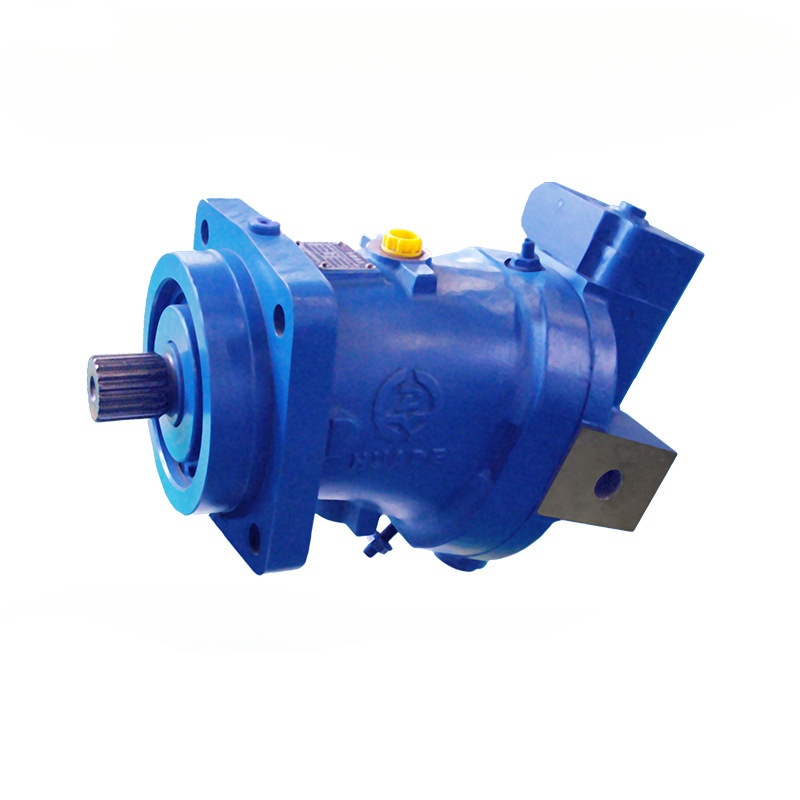
I like to call the fixed motor "Old Reliable." It’s a straightforward piece of iron. Whether it is a Swashplate design or a Bent Axis design, the internal geometry is locked. The angle of the plate or the cylinder block is set at the factory.
Why you’ll love it:- Built Like a Tank: Fewer moving parts mean it can handle "dirty" oil better than its variable cousins.
- Lower Upfront Cost: You aren't paying for complex servo pistons or control valves. It is often 2 to 4 times cheaper.
- Predictable: You know exactly how it will behave. It’s perfect for conveyors, simple fans, or mixers where the load doesn't change much.
It is inefficient when the work changes. If you need to speed up a fixed motor, you have to pump more oil. If your pump is already at max, you are stuck. You also waste a lot of energy as heat if you use valves to throttle the speed.
The Variable Displacement Motor: The "Smart" Choice
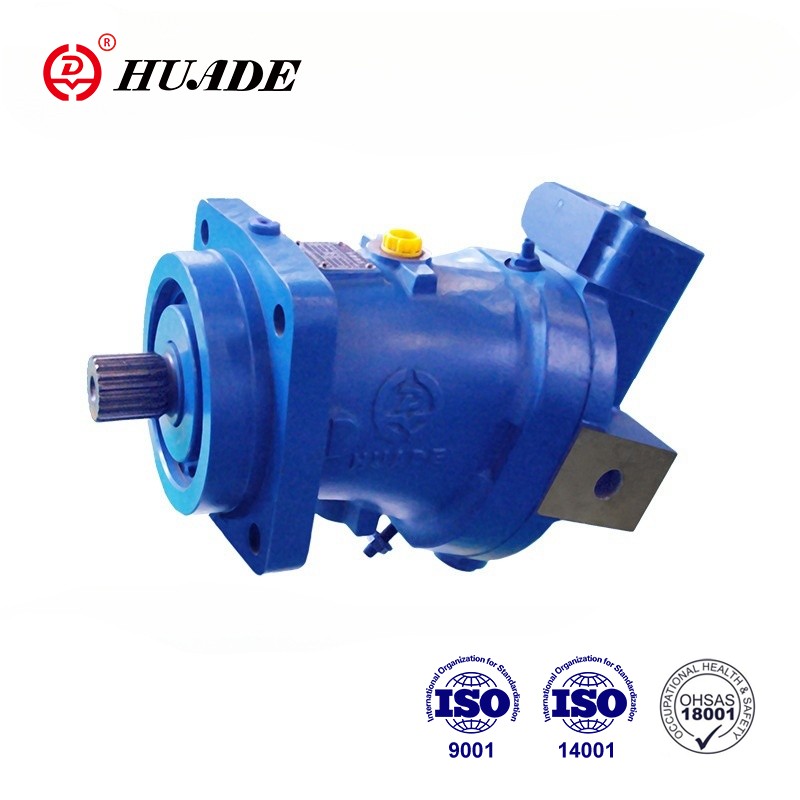
A Variable Displacement Motor (VDM) is essentially a motor with a built-in gearbox. By using a small internal piston (the servo) to tilt the swashplate, the motor can change its "lungs" from 100cc down to almost 0cc.
Why it’s worth the money:- High Speed, Low Torque: Need your excavator to travel quickly between work sites? Tilt the motor to a small displacement. It will scream along at high RPMs using very little oil.
- Low Speed, High Torque: Need to climb a muddy hill? Tilt it back to max displacement. Now you have the "grunted" torque to move the earth.
- Energy Savings: Because it only takes the oil it needs, your system runs much cooler. I’ve seen systems save 30% on fuel just by switching to variable motors.
How Do You Actually Control a Variable Motor?
You don't just let the motor do whatever it wants. You need a "brain" to tell it when to shift.
- Two-Point Control (Rabbit/Turtle): This is the classic switch on a dashboard. You click a button, a solenoid fires, and the motor jumps from "High Torque" to "High Speed."
- Automatic Pressure Control (HA): This is the smart way. The motor senses the system pressure. If it feels the machine is struggling (pressure rises), it automatically increases its own displacement to give you more torque. It’s like an automatic transmission in your car.
- Electric Proportional (EP): A computer (ECU) sends a signal to precisely set the displacement. This is the gold standard for high-end winches and fan drives.
The Head-to-Head Comparison
| Feature | Fixed Displacement | Variable Displacement |
|---|---|---|
| Complexity | Low (few moving parts) | High (contains servo & valves) |
| Initial Cost | Lower | Higher |
| Speed Range | Limited by pump flow | Wide (via displacement reduction) |
| Heat Generation | Higher (due to throttling) | Lower (optimized flow) |
| Best For | Conveyors, simple fans | Travel drives, high-speed winches |
Which One Should You Buy?
I always tell my clients to look at their Duty Cycle.
If your machine does the same thing all day long—like a conveyor belt—stick with Fixed. You’ll save money on the part and the maintenance.
However, if your machine has to do two different things—like an excavator that needs to both dig with power and drive with speed—you need a Variable Motor. The fuel savings and productivity gains will pay back the higher price tag within the first year or two.