

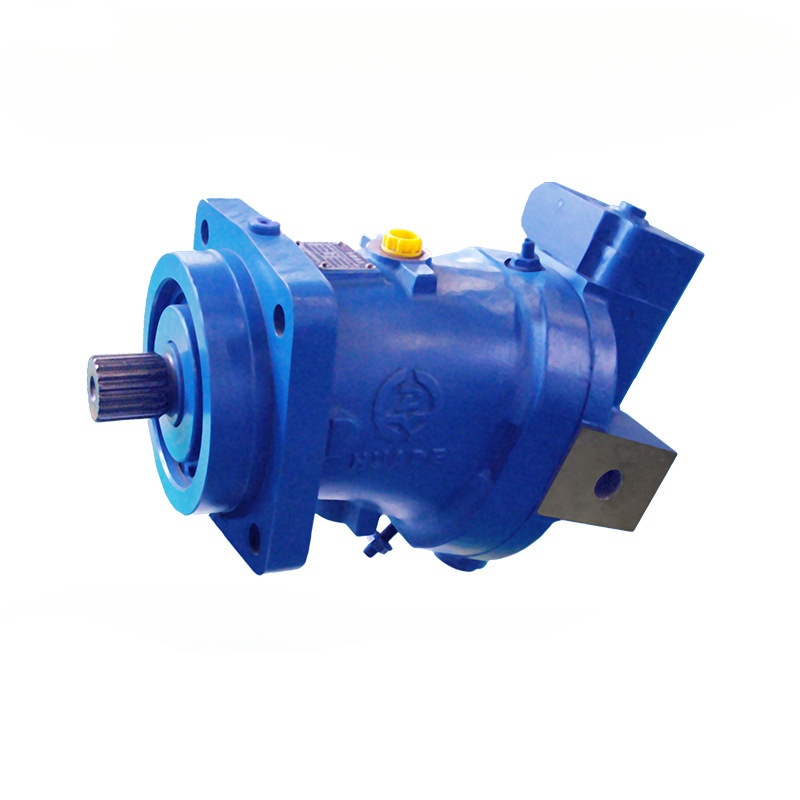



If you’re standing next to a hydraulic machine and the air smells like burnt toast, you probably have an overheating axial piston motor on your hands. It’s a frustrating spot to be in. I’ve seen seasoned operators ignore a hot motor until it literally welds its internal parts together. By then, you aren't looking at a repair; you’re looking at a $10,000 scrap metal bill.
So, how hot is too hot? Generally, if your motor’s case temperature climbs above 180°F (82°C), you’re in the danger zone. Most systems like to cruise between 120°F and 150°F. When things get toasty, it's usually one of these five culprits.
1. The "Invisible" Leak: Excessive Internal Drainage
Every axial piston motor leaks a little by design. This "slip" lubricates the pistons and the valve plate. But when those internal parts wear down, that tiny leak becomes a flood.
Think of it this way: high-pressure oil that escapes without doing work turns straight into heat. If your motor is losing 15% of its oil to the case drain instead of using it to turn the shaft, that’s a massive amount of energy being dumped as pure thermal load.
The Fix: Perform a "bucket test" on your case drain line. If the flow is significantly higher than the manufacturer’s spec, your valve plate or piston shoes are likely scored and need a rebuild.
2. The Pressure Fight: Relief Valve vs. Pump Compensator
I see this mistake all the time in the field. Your pump has a pressure compensator, and your system has a main relief valve. If the relief valve is set lower than the pump's compensator, they start fighting.
The pump tries to reach its high-pressure setting, but the relief valve opens first, dumping all that high-pressure flow back to the tank. You’re basically running a giant water heater.
Always set your relief valve at least 250–300 PSI higher than your pump’s compensator. This ensures the pump "destrokes" before the relief valve has to scream.
3. Oil Viscosity: The "Goldilocks" Problem
Oil thickness matters. If your oil is too thin (low viscosity), it can’t maintain the microscopic film between the pistons and the cylinder block. Metal hits metal. Friction skyrockets. Heat follows. On the flip side, if the oil is too thick, the motor has to work harder just to move the fluid, creating "internal friction."
What to check:- Are you using the right ISO grade for your climate?
- Has the oil broken down from age?
- Boldly check your oil color. If it looks like a milky latte, you’ve got water contamination, which kills viscosity instantly.
4. The Stuck Bypass: Cooling System Failures
You can have the cleanest radiator in the world, but if the oil never reaches it, it won't stay cool. Many systems use a thermal bypass valve that keeps oil out of the cooler until it’s up to temperature.
I’ve seen these valves fail in the "closed" position. The motor gets hotter and hotter, but the radiator stays cool to the touch. It’s a classic fake-out.
The Fix: Use an infrared thermometer to check the temperature at the cooler's inlet and outlet. If there's no temperature drop, or if the inlet is cold while the motor is hot, your bypass valve is lying to you.
5. The Silent Killer: Case Drain Backpressure
The case drain is the "exhaust" for the motor’s internal lubrication. It needs a clear, low-pressure path back to the tank. If that line is restricted—maybe by a clogged filter or a crushed hose—the pressure builds up inside the motor housing.
This pressure pushes the shaft seal against the rotating shaft with too much force, creating massive friction heat. Even worse, it can actually lift the "shoes" off the swashplate, leading to a catastrophic mechanical failure.
Ensure your case drain line goes directly to the tank, bypassing the main return filters if possible (or using a dedicated low-pressure filter).
Quick Diagnostic Checklist
If you're troubleshooting right now, follow this order to isolate the heat source systematically:
| Step | Action | Potential Issue Indicated |
|---|---|---|
| 1 | Shoot the case drain line with a temp gun. Is it much hotter than the inlet? | Internal leakage / Scored valve plate. |
| 2 | Check the radiator and bypass. Is it clogged with dust or seeds? | Cooling system failure. |
| 3 | Verify pressure settings. Is the relief valve "hissing" constantly? | Compensator vs. Relief Valve pressure fight. |
| 4 | Sample the oil. Does it smell burnt, look milky, or feel too thin? | Viscosity breakdown / Water contamination. |